– local 5th graders on a future journey show the way to 2032
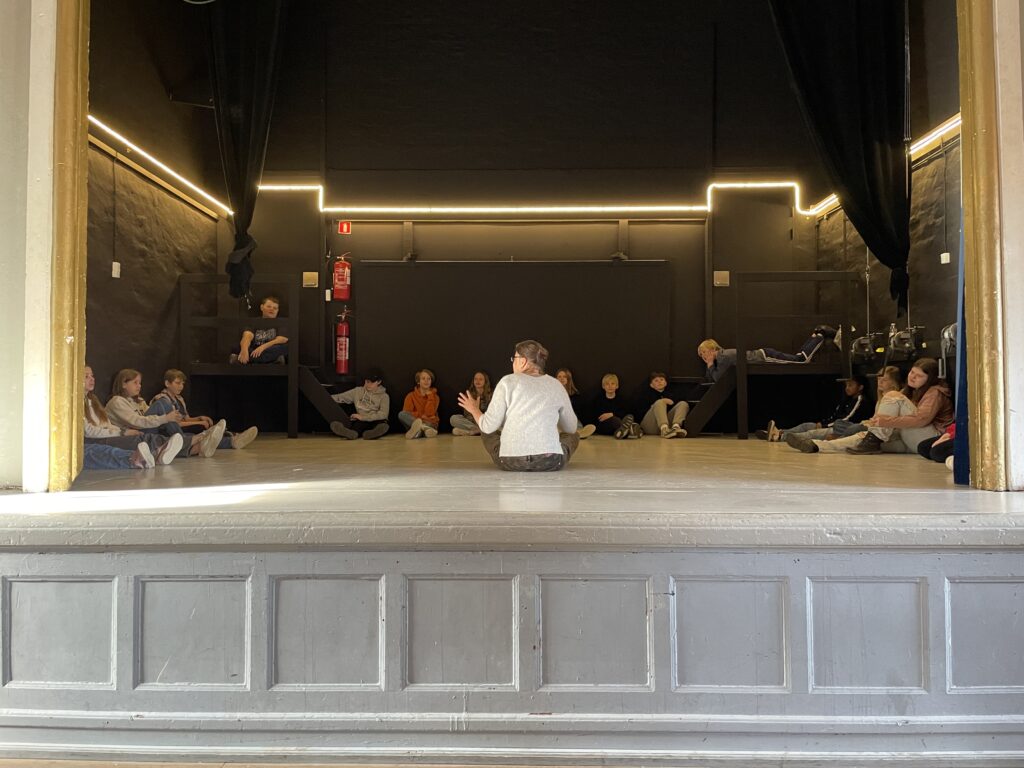
At a workshop supported by Spar Nord Fonden and Erhvervs- og Industrifond Helsingør, we've sent the kids ahead on the journey to 2032. Actress Charlotte Bøving was their guide in Stengade's old theater hall, as she took the 5th graders from Grydemoseskolen on a "future journey" throughout Helsingør.
In this interview, Charlotte explains what the children gain from imagining the future. And what we adults can learn from listening to them. The workshop is part of the association's development work, which will result in an application for Helsingør to become the European Capital of Culture in 2032.
What was the purpose of the future journeys?
They were about the future physical spaces for communities. Basically, they aimed to open up the children's inner world as a starting point for looking at their outer world with new and innovative eyes. To open up to the inner images or ideas we don't usually connect with, because we're so busy force-feeding ourselves with images from outside.
Today, more than ever before, children are fed with other people's imaginations. Adults producing content from their generation's perspective. To some extent, this is necessary so they get ideas about what's possible, but on the other hand, we need to be careful not to serve everything to them, so their own imagination doesn't remain passive amidst the buffet of streaming services and digital games. A lot of creativity happens online, so what about craftsmanship? Society is crying out for more people trained in manual work. That's why it was important that the future journey also became a creative process resulting in physical products.
What is the method all about?
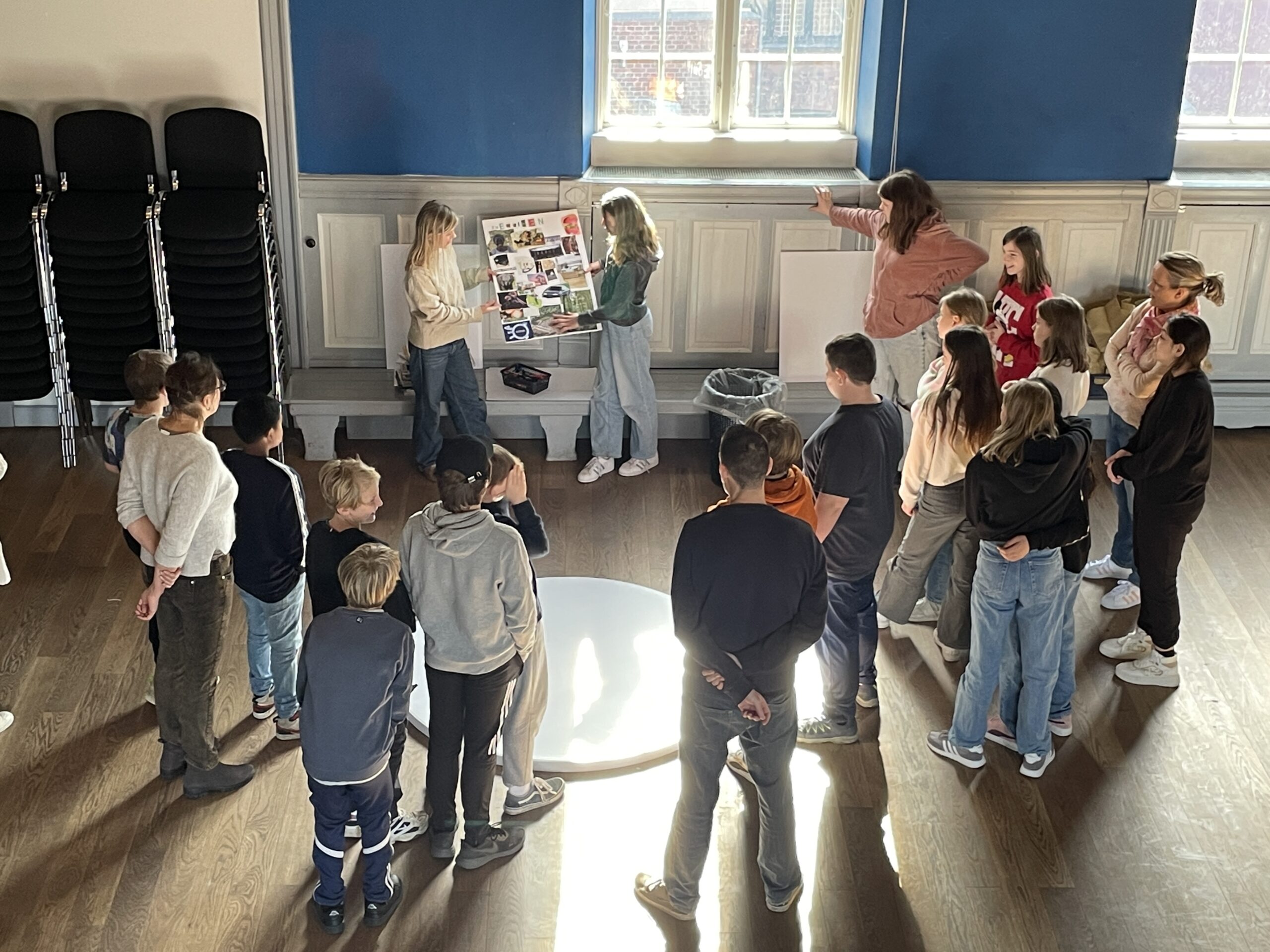
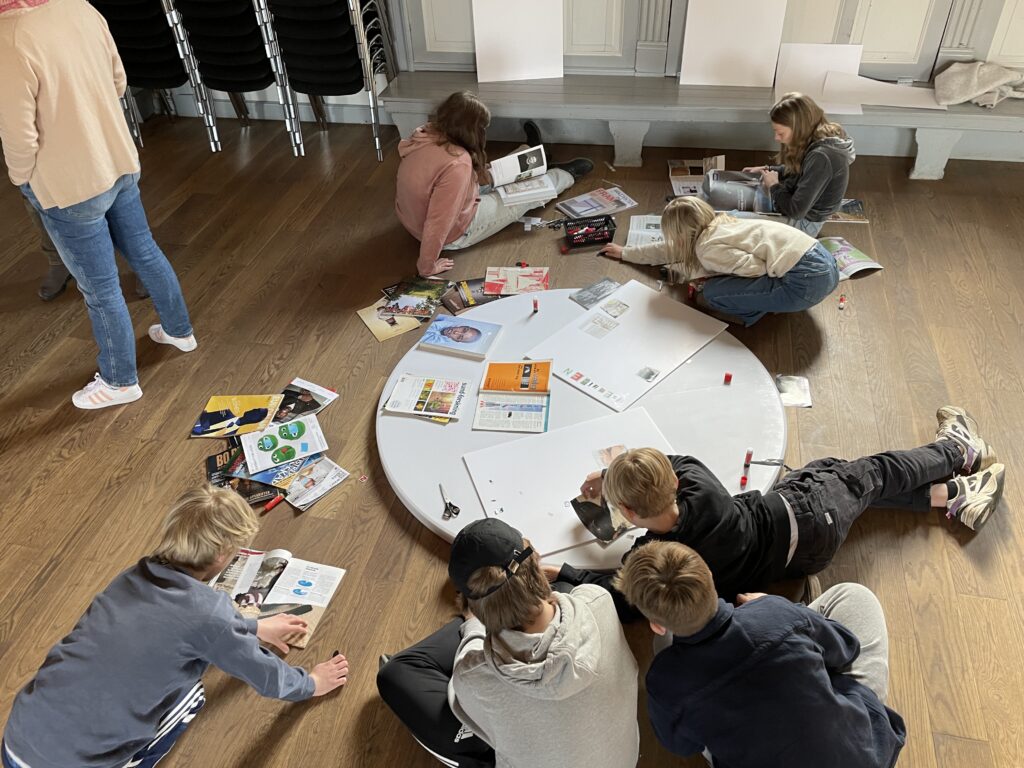
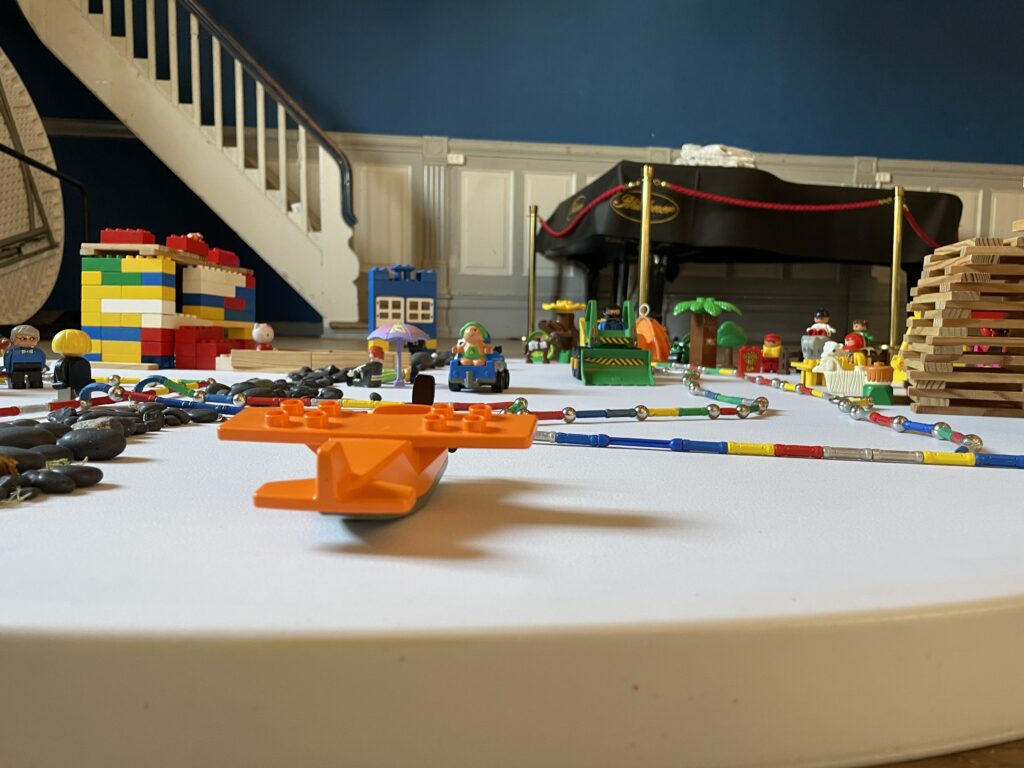
We all need to be included in communities. It's a fundamental need to be part of a physical, present community in a physical space. The children's dialogue and reflections with each other and the adults involved take place in a physical creative space where they create posters and models. Additionally, there was also a task to photograph squares and places in Helsingør that they thought could be used differently. All with a focus on future communities.
It was uplifting to let the children sit with a stack of quality magazines. Old-fashioned, printed publications, and see their eagerness to learn and curiosity awakened. Or the curiosity it sparked when they were sent around town with the task of taking photos.
When students are gathered in a group as large as a class, they can inspire each other, as long as we arrange activities for them that allow them to think innovatively and train their imagination. Just like everything else, it's about doing it often enough.
We also had a trash can in the workshop, where the kids could throw away anything they didn't want to bring into the future. At the end of the workshop, we lift the lid and ask them what could potentially be recycled, maybe in a more sustainable way or given new life in a more imaginative form. This way, the workshop is just the first step as we explore and develop our vision for the Capital of Culture in 2032.
So, what do the kids tell us?
It varies a lot, though they are naturally guided by the prompts we give them. If I mention Putin's war as something to throw away, I end up steering their focus. Both urban environments and nature were recurring themes when I asked them to think about what kind of surroundings communities thrive in. In their own words, sustainability and animal welfare also came up repeatedly. Finally, stimulants are also a big deal. Soda and candy. And it should ideally be free and always available.
I was a bit surprised that many kids threw 'school' into the trash can. And when we started brainstorming how school could be reinvented, they struggled to see concrete possibilities. They suggested technological solutions where knowledge could be transferred directly from a source, so they wouldn't need to acquire it themselves. Some even suggested that school should be a football field. As an adult, you could interpret that as learning and education not being a goal for the students in itself. So why learn things when technology can just give you the answer? As for the football field, you could see that as a desire for a more physically oriented school with clear rules.
The ocean also played a big role in their ideas for a better future, both for recreation and as a place to live. Sometimes their ideas get really fantastical. “The harbor is a place where cars can fly three meters above the ground.” “The pedestrian street should become a river with dolphins.” So then we have to ask: Why is it important for cars to fly three meters above the ground? What space on the ground are they taking from the kids? Rooftops should be parking lots, was another suggestion. Why is it so important for the kids that those cars get off the street level?
How does the workshop contribute to Helsingør becoming European Capital of Culture 2032?
A common thread in the core narrative about Elsinore 2032 is communities. Not only does the association see culture as 'community-building,' but its activities should also happen within communities. A two-hour workshop gives us some insights into what's going on in the kids' minds. The workshop was just a brief encounter, which I believe we should develop into a strong partnership.
Culture is about communities built around creative and artistic experiences. The 'Future Journey' is an example of how we can work creatively together, reflect on communities, and improve our dialogue using physical creations as a starting point. The conversation becomes an integral part of the process, a method that can easily be adapted for young people and adults. Many youth communities already work this way. A brainstorm isn't just in your head or on little yellow sticky notes; it also comes to life through our hands.