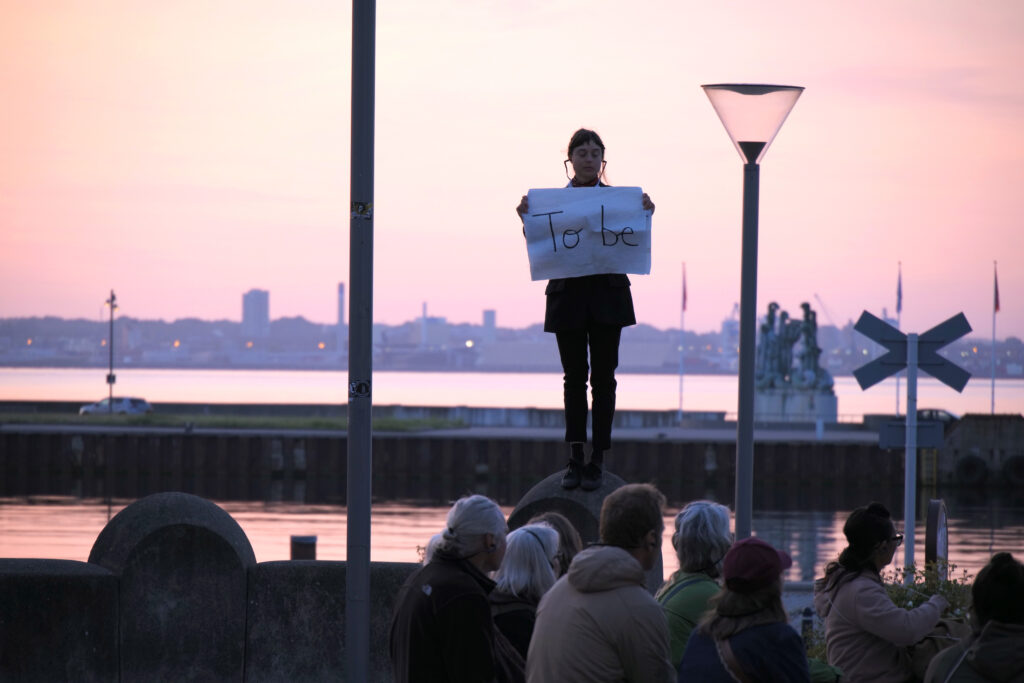
To be … Helsingør will be the European Capital of Culture in 2032

In early 2026, the City Council of Helsingør voted 22 out of 25 in favor of supporting the idea of Helsingør as a European Capital of Culture. The politicians allocated funds to enable Elsinore 2032, in close collaboration with the municipality, to develop the project and submit an application for the title.

Latest news about the thesis title and topic …

Applications for prequalification must be submitted to the Ministry of Culture no later than October 5.

A European jury, supplemented by two Danish members, will determine which cities will be prequalified to submit a final application in 2027 for the title of European Capital of Culture in 2032, when one city in both Denmark and Bulgaria will hold the title.

The Project, Year by Year

2017
The idea came up at a networking meeting organized by "We Bring All of Helsingør Together"
2018
An interest group was established
2021
The association was founded
2023
The association served as the secretariat for Culture Night in Espergærde, Helsingør, Hornbæk, and Tikøb
2026
The City Council decided to apply for the title, and the association began working on the application
2027
The winning city gets picked
2032
The Capital of Culture event happens

Cross-sector collaboration is the key to Helsingør’s bid

When the City Council of Helsingør Municipality decided in early 2026 to vie for the title of Denmark’s candidate for European Capital of Culture in 2032, a partnership structure was quickly established between the municipality and the Elsinore 2032 association. An effective secretariat based within the association will ensure a broadly supported application that spans various stakeholders, industries, and sectors.   

In the spring of 2026, the work will be organized as a joint process. The association will oversee the overall process and be responsible for engaging stakeholders, developing, and summarizing the content of the application, while the municipality will contribute through cross-functional engagement in specialized committees and centers to identify relevant development agendas.

The association is conducting a systematic survey of stakeholders, expertise, and opportunities for collaboration across the cultural, business, educational, and civil society sectors in Helsingør, North Zealand, and southern Sweden. Input from this survey—along with contributions from the municipal process—will be synthesized into a joint concept, including a program title and overarching themes for the application, which will be presented to the political authorities.

The creative development of projects takes place in parallel through targeted development processes that bring together stakeholders across sectors and geographic regions. The association supports this process through facilitation, partnership building, and the allocation of project funds for the early development of ideas and collaborations. Among other things, these funds are used to promote cross-cutting projects with a focus on collaboration, the European dimension, and new target groups, so that the projects can refine the content and direction of their applications.

At the same time, the association is developing program tracks and drafting the initial application, which is being refined on an ongoing basis in collaboration with the municipality and the advisory group. The final application will be completed over the summer and submitted to the city council for political approval prior to its submission to the Ministry of Culture in September

European Capitals of Culture over the Years

Every year, the EU picks two European Capitals of Culture. The goal is to bring the people of the EU closer together.

The list of culturally rich cities in Europe that have held the title of European Capital of Culture is long. It all started in 1985 when Athens kicked off this culture-enriching tradition.

1985: Athens (Greece)
1986: Florence (Italy)
1987: Amsterdam (Netherlands)
1988: West Berlin (West Germany)
1989: Paris (France)
1990: Glasgow (Scotland)
1991: Dublin (Ireland)
1992: Madrid (Spain)
1993: Antwerp (Belgium)
1994: Lisbon (Portugal)
1995: Luxembourg (Luxembourg)
1996: Copenhagen (Denmark)
1997: Thessaloniki (Greece)
1998: Stockholm (Sweden)
1999: Weimar (Germany)
2000: Avignon (France), Bergen (Norway), Bologna (Italy), Brussels (Belgium), Helsinki (Finland), Krakow (Poland), Prague (Czech Republic), Reykjavík (Iceland), Santiago de Compostela (Spain)
2001: Rotterdam (Netherlands), Porto (Portugal)
2002: Bruges (Belgium), Salamanca (Spain)
2003: Graz (Austria)
2004: Genoa (Italy), Lille (France)
2005: Cork (Ireland)
2006: Patras (Greece)
2007: Luxembourg (Luxembourg) — Sibiu (Romania)
2008: Liverpool (United Kingdom) — Stavanger (Norway)
2009: Linz (Austria) — Vilnius (Lithuania)
2010: Essen (Germany) — Pécs (Hungary) — Istanbul (Turkey)
2011: Turku (Finland) — Tallinn (Estonia)
2012: Guimarães (Portugal) — Maribor (Slovenia)
2013: Marseille (France) — Košice (Slovakia)
2014: Umeå (Sweden) — Riga (Latvia)
2015: Mons (Belgium) — Plzeň (Czech Republic)
2016: San Sebastián (Spain) — Wrocław (Poland)
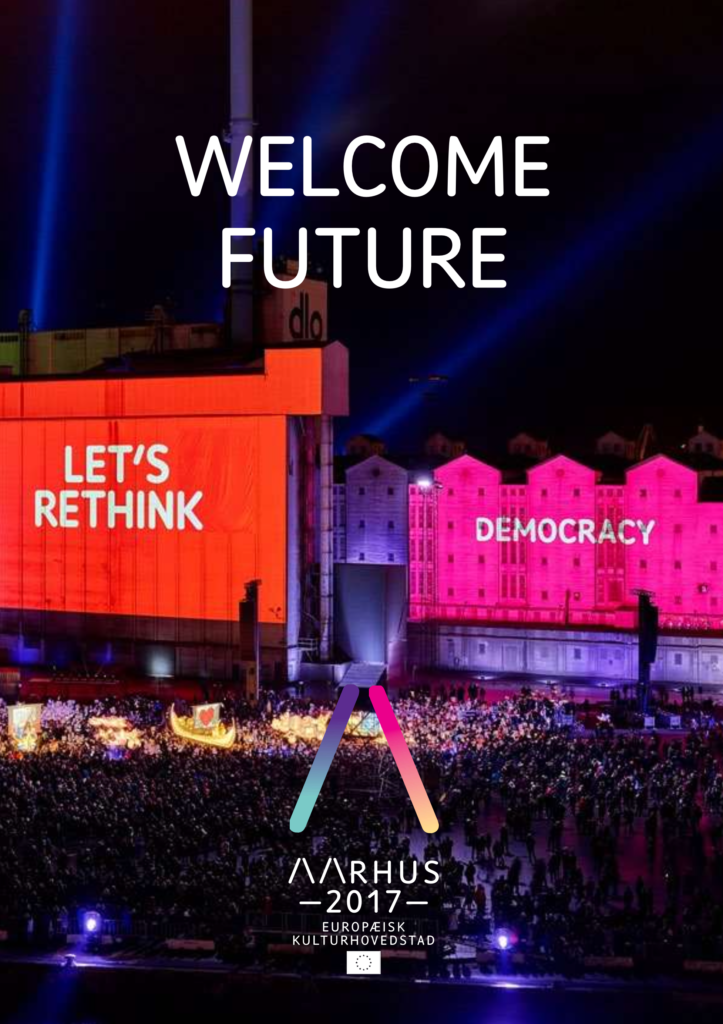
2017: Aarhus (Denmark) — Pafos (Cyprus)
2018: Leeuwarden (Netherlands) — Valletta (Malta)
2019: Matera (Italy) — Plovdiv (Bulgaria)
2020: Galway (Ireland) — Rijeka (Croatia)
2022: Kaunas (Lithuania) — Esch (Luxembourg) — Novi Sad (Serbia)
2023: Timișoara (Romania) — Eleusis (Greece) — Veszprém (Hungary)
2024: Bodø (Norway) – Tartu (Estonia) – Bad Ischl (Austria)
2025: Nova Gorica/Gorizia (Slovenia/Italy) – Chemnitz (Germany)
2026 – Trenčín (Slovakia) – Oulu (Finland)
2027 – Liepāja (Latvia) – Évora (Portugal)