Actress Charlotte Bøving led a series of workshops at Kulturhus Syd, guiding 200 students from local schools through a "future workshop" where the children used creative formats to share their ideas for the Cultural Capital in 2032. Charlotte is a board member of Elsinore 2032. In this blog post, she writes about the results of the project, which is supported by the Nordea Foundation.
In February 2023, I journeyed with 200 children into the cultural communities of the future. We had ten workshops with 4th and 5th graders in Helsingør Municipality, where the children spent two intense hours creating a physical vision of their dream future city.
The program included a fantasy journey, a drawing brainstorm, and the creation of a future city. The children worked really hard, only taking a short break for a stop-dance game, followed by snacks and juice.
Photos: Janne Franck, volunteer
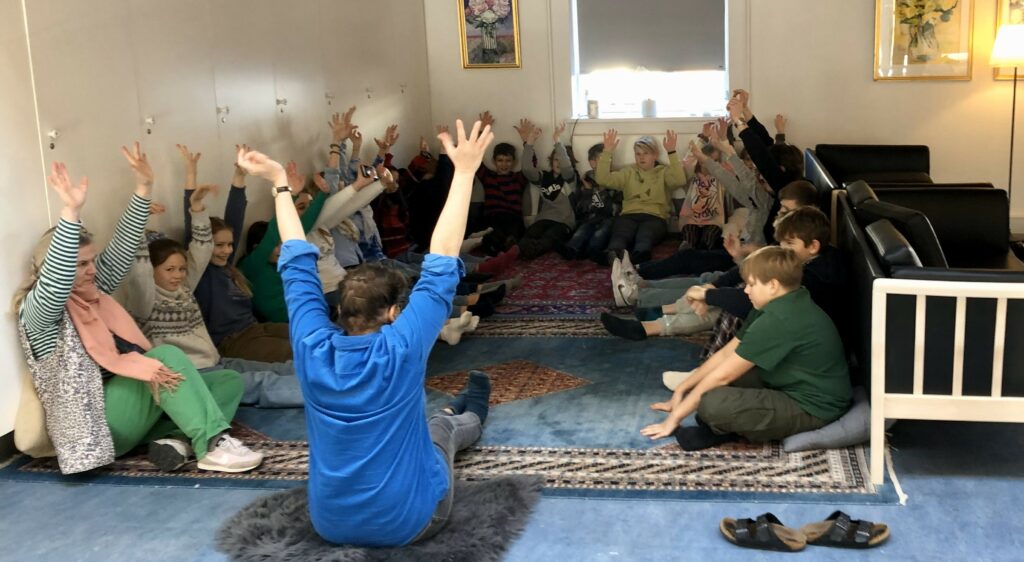
To start, the children sat in a semicircle on a big carpet. Everyone had back support, so they could relax their bodies while I guided them through an inner journey.
Most of the children were immediately on board with the idea, but for some, it was a big challenge to sit still with their eyes closed. A couple of kids even relaxed so much that they fell asleep! I let them sleep, believing it was what they needed most, and knowing they'd participate with more energy when they woke up, which turned out to be true.
A teacher noted that she plans to set up a carpet in their classroom in the future, a spot where children can go when they need some peace and quiet to relax.
The idea of a resting place later became a concrete part of one group's future city, which they called "Leisure City." I thought, just like some innovative workplaces offer employees a meditation and rest room to retreat to, this could definitely be a welcome idea for schools of the future too.
In creative communities, the children came up with their ideas for future urban environments, envisioning them dominated by creative communities.
Charlotte Bøving, actress
After the fantasy journey, the children shared their inner images with each other. Some kids had a lot to say, while others said everything was black. I made sure to emphasize that we're all different and there's no right or wrong way to do the exercise. Sometimes you see something, and sometimes you don't. Some people find it easier to visualize than others.
That said, visualization is also something you can practice!
To tap into the essence of imagination, you need to be able to relax and feel grounded in your body. You need to feel safe. Fear blocks imagination and creativity, and I know that so well from my work as an actress.
Another factor is how practiced children are at creating their own images. If they read books or are used to hearing stories or having them read aloud, they have easier access to their own imagination. Nowadays, there's such easy access to the entertainment industry's ready-made images and stories that we really need to train children's innovative talents by creating environments that support the joy of creation.
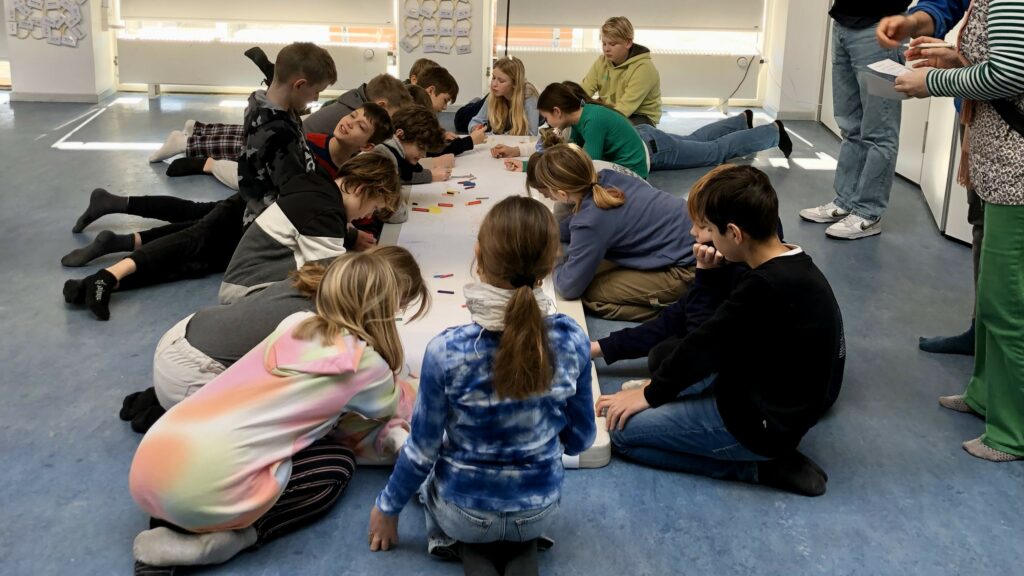
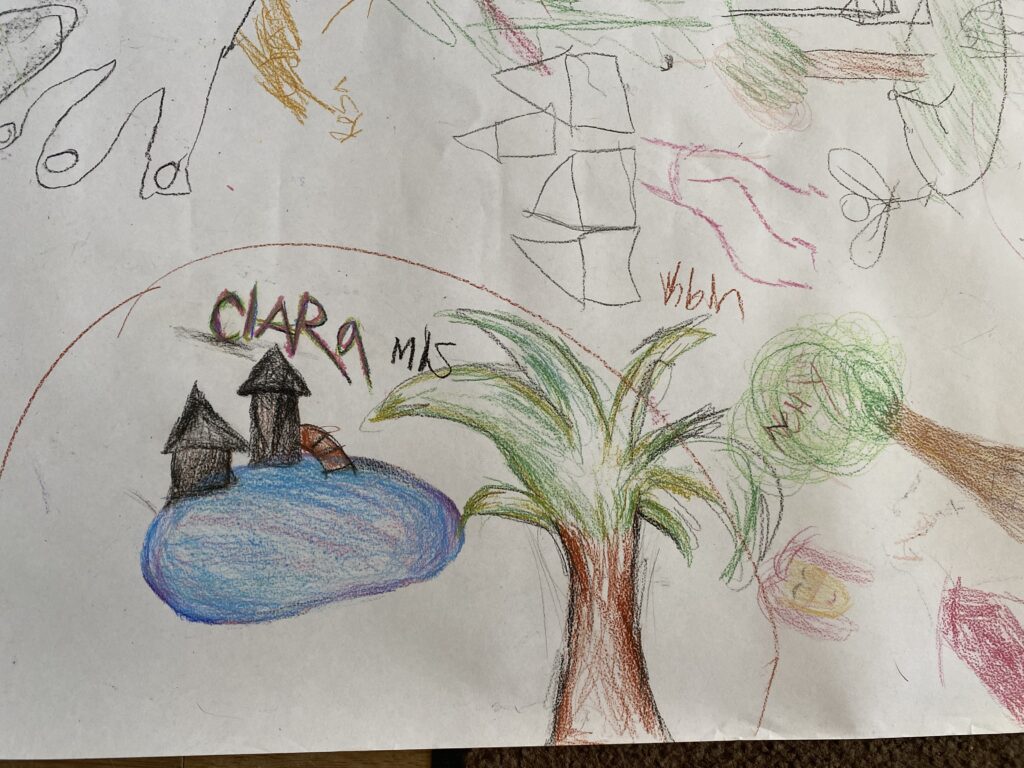
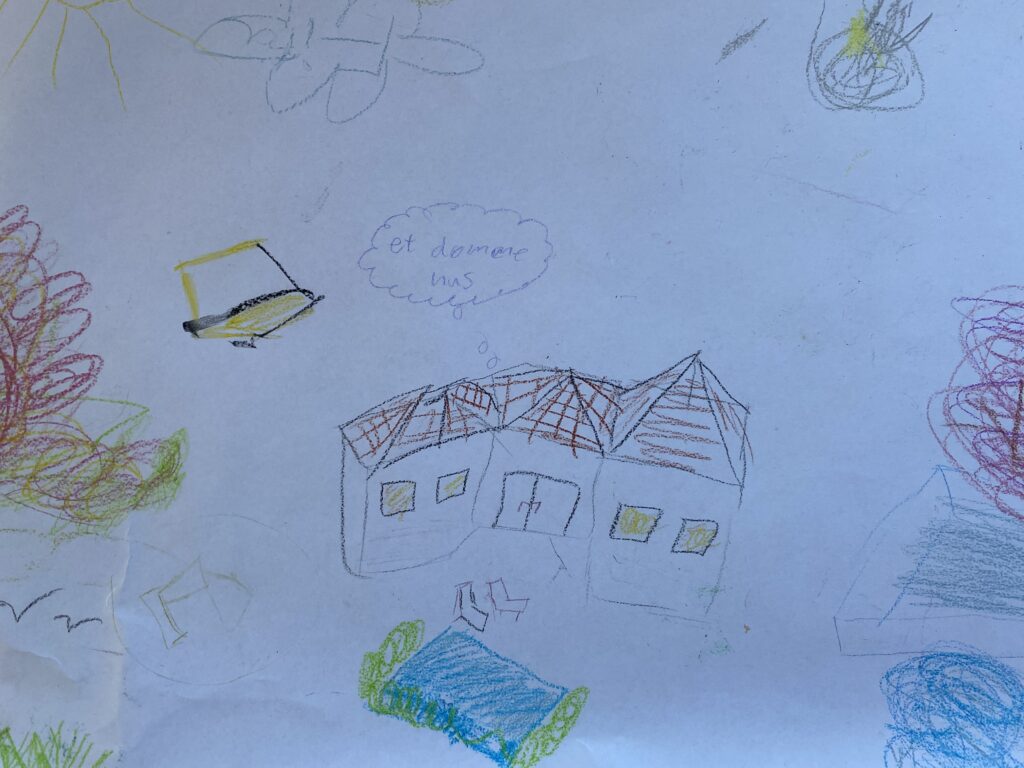
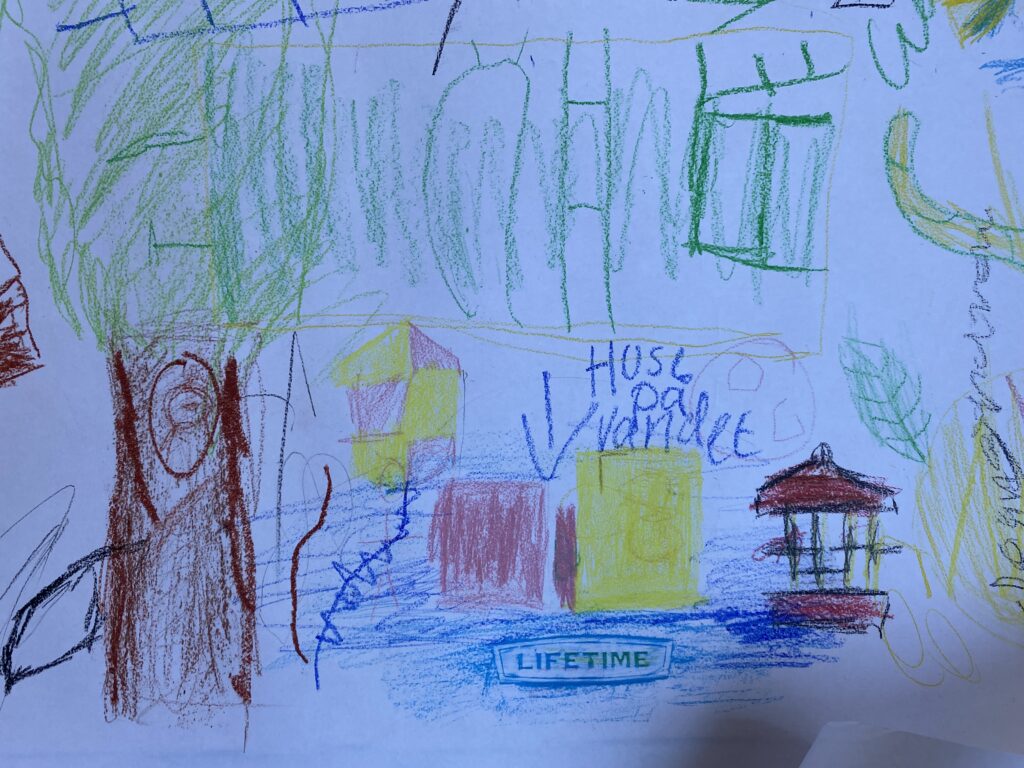
The children gathered around a piece of paper, about 3-4 meters long and 1 meter wide, spread out on the floor. They started by drawing what they had experienced on their fantasy journey, but also came up with new ideas for great communities. The teacher and I asked about their drawings, encouraging them to elaborate and develop their ideas and talk to each other. This way, their individual drawings and ideas became part of a shared "idea bank" that they could then draw inspiration from when creating their future cities. Their imagination blended with communities they already knew.
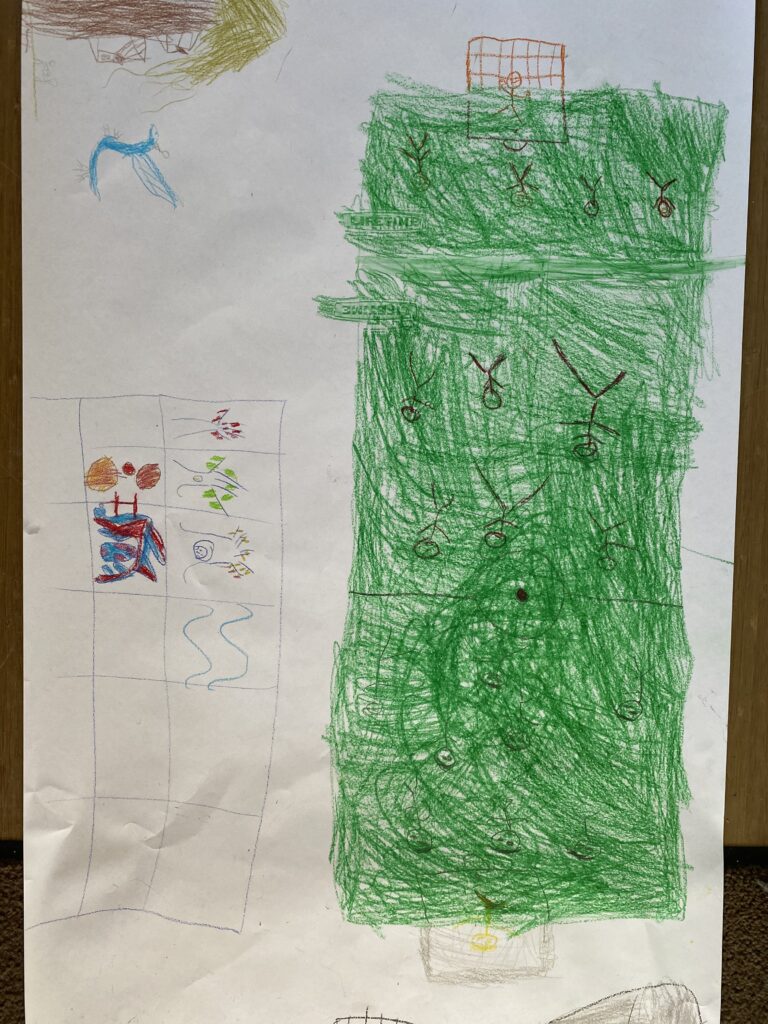
The Drawings
The children drew football fields from above, from the side, football stadiums, and football jerseys. When I asked why football should be part of the future city, their answers were: "It's fun," "scoring goals," "being with friends," "seeing yourself get better when you practice," "wearing your football jerseys," "training," and "running." My feeling is that football's clear focus, sense of community, and rules are really motivating for many, especially a lot of the boys.
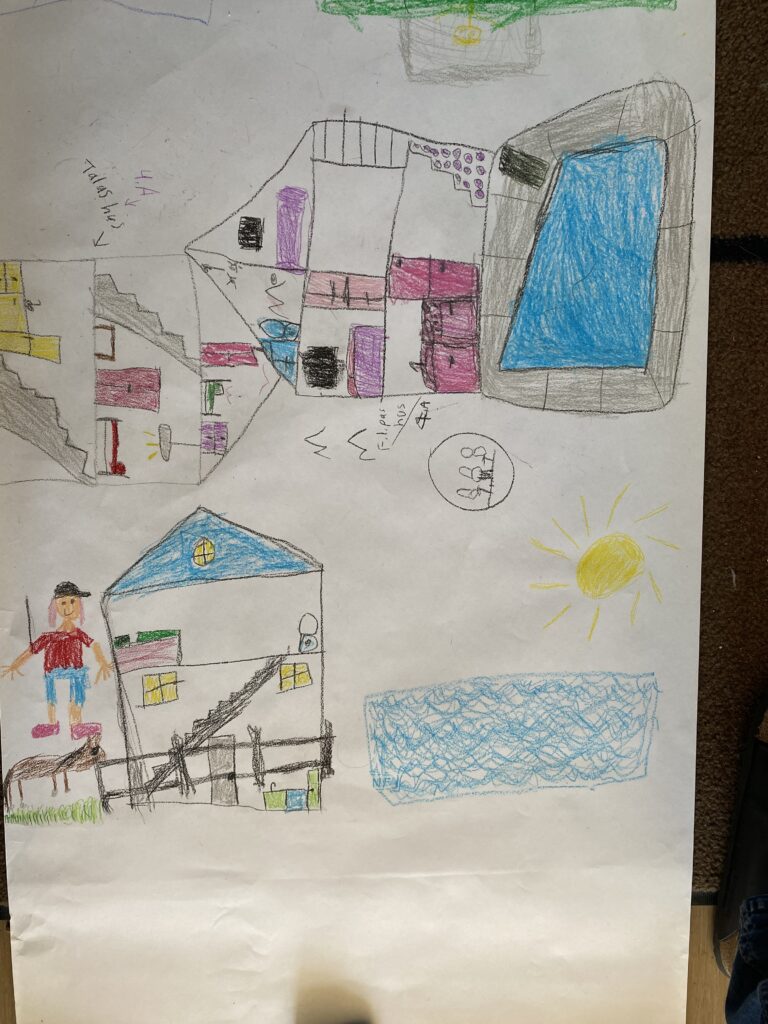
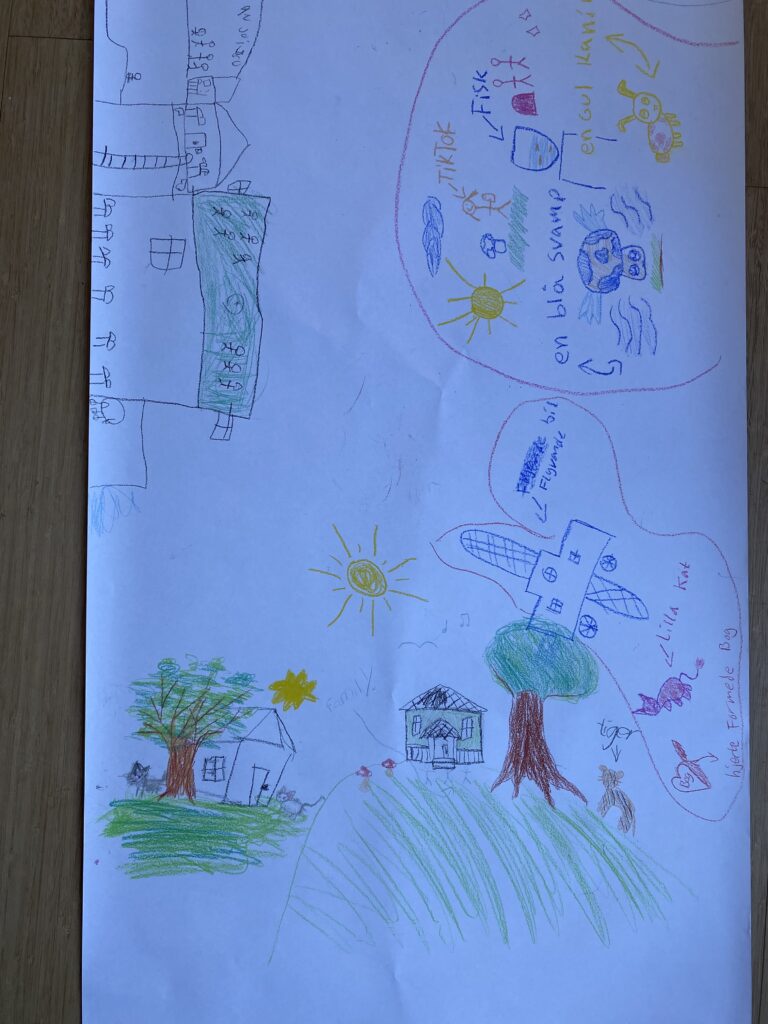
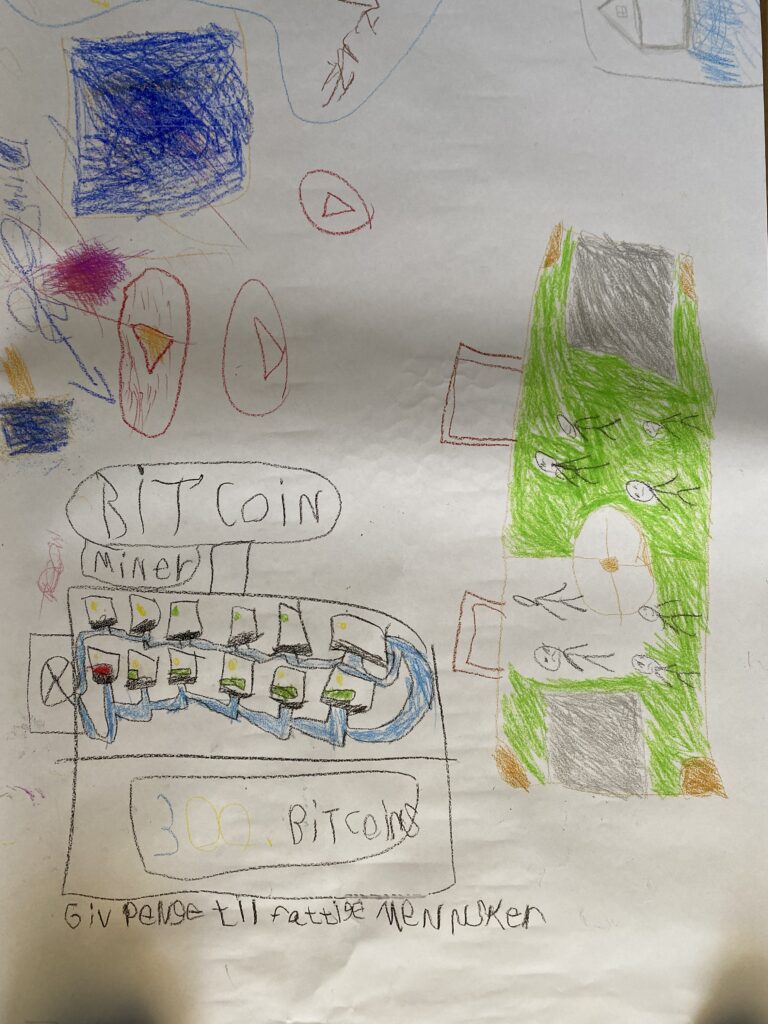
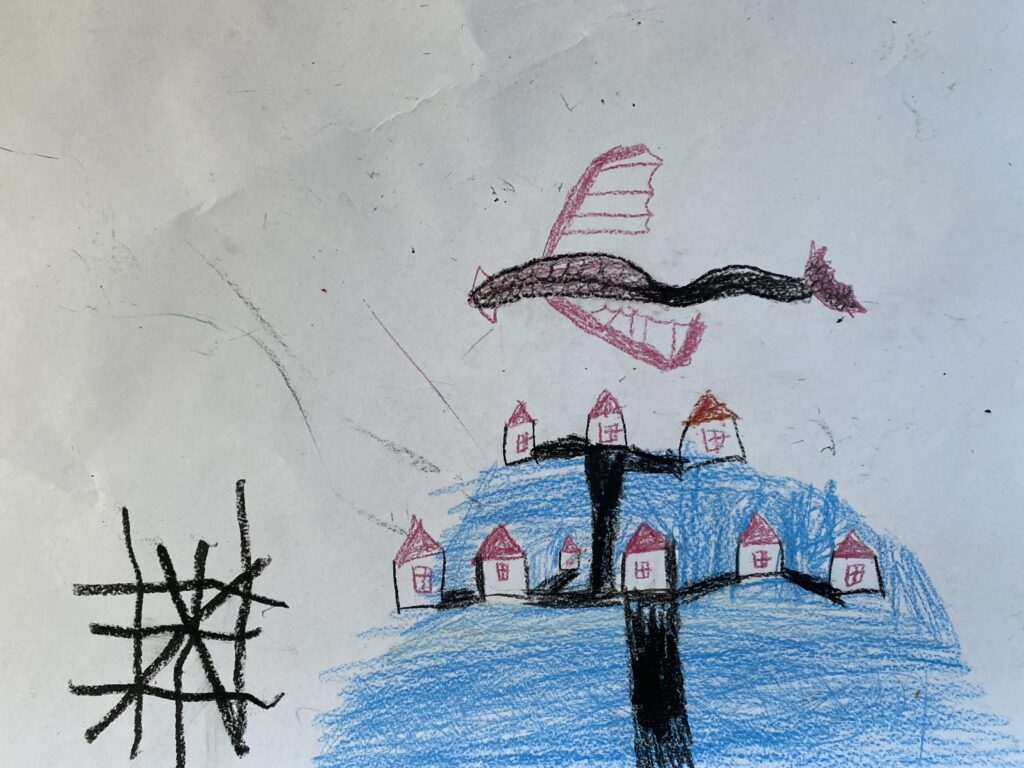
They drew trees of all sorts of colors and shapes, tiny ones and giant ones. It was super clear that several elements from the fantasy journey I guided them on, like asking them to imagine their very own tree, really shone through in their first drawings. There were trees with fruit, and trees you could live up in or inside. They drew houses too. Small houses surrounded by big gardens or a swimming pool, tall buildings, farmhouses, and clusters of houses built right on the water. Quite a few also drew houses you could see inside, where the interior design was a big deal. I noticed it was mostly the girls who focused on the details of colors and the interior design of the house, making sure it was cozy, beautiful, and spacious. Animals were included in most of the drawings. Water and beaches were also dominant themes. Then there were activity centers with PlayStations, amusement parks, sports, and food stalls. Sushi, McDonald's, and candy were common food themes too, but some kids also drew eco-burgers, fruit, and vegetables, and several were keen on the idea that animals shouldn't be eaten.
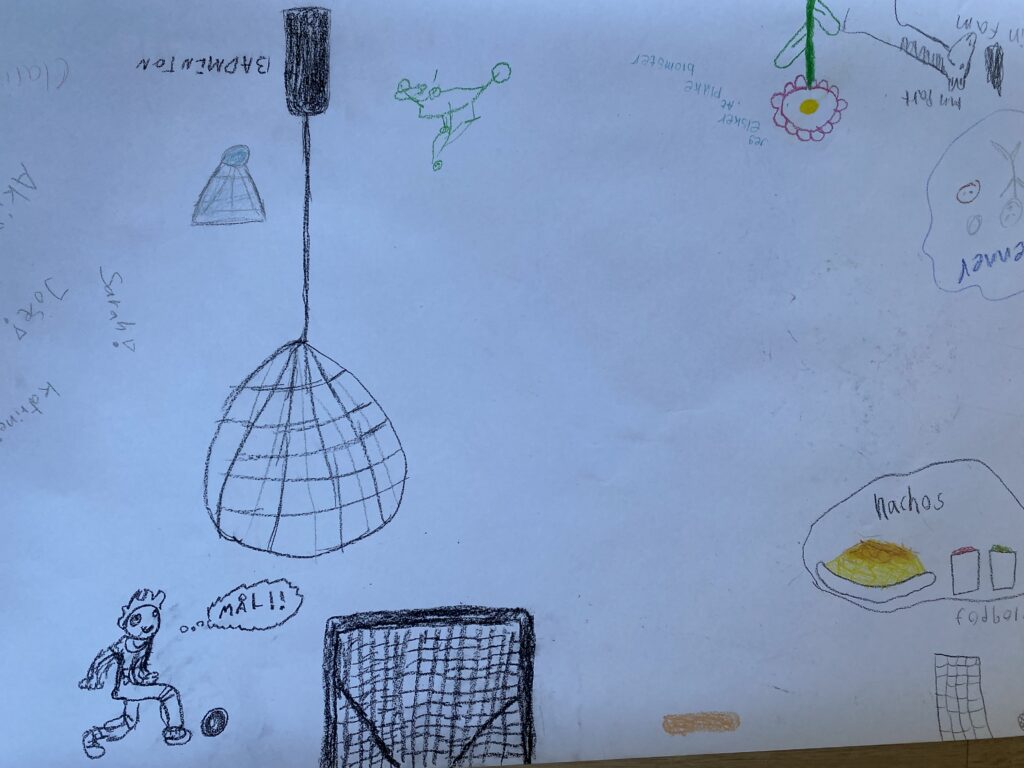
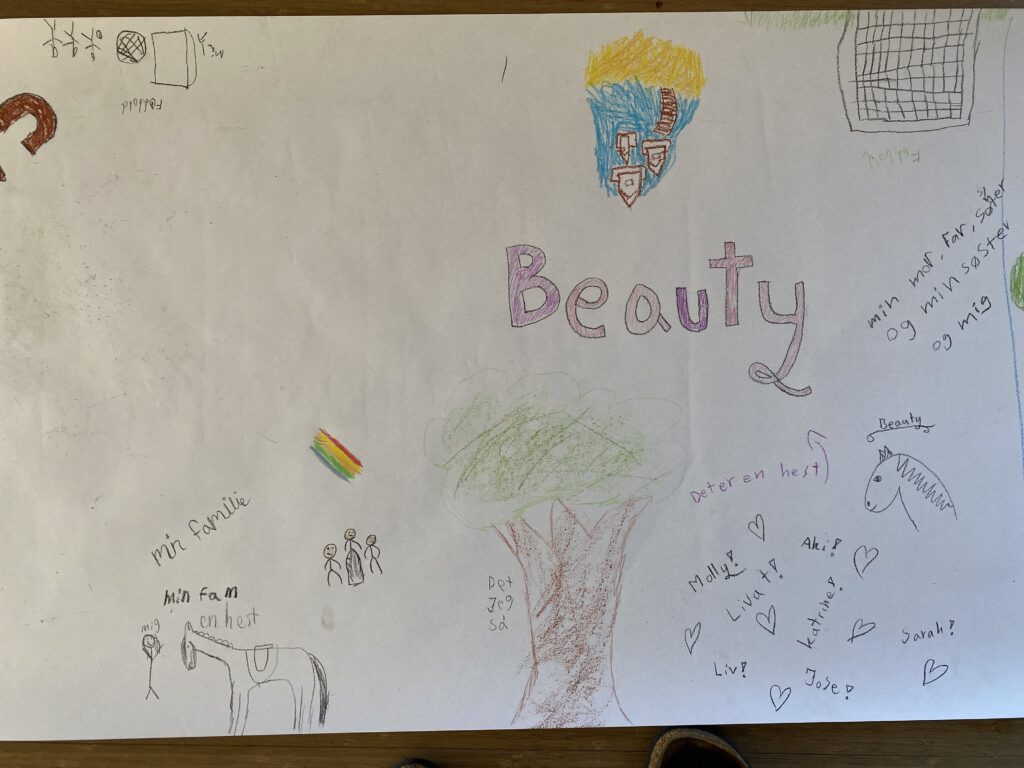
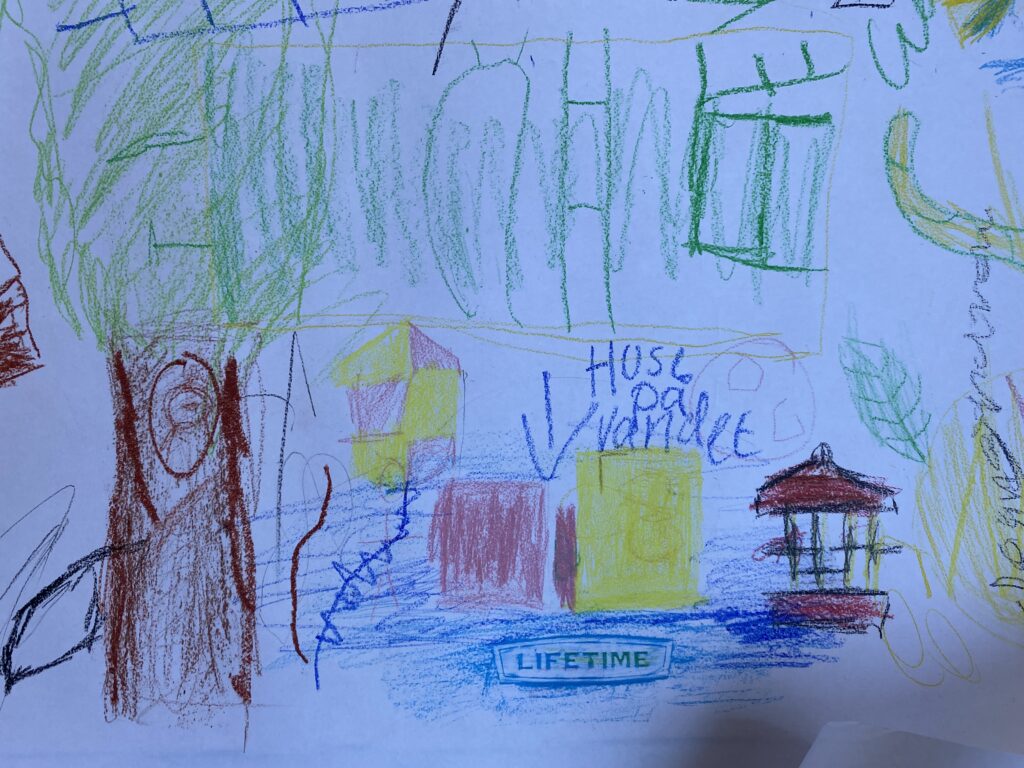
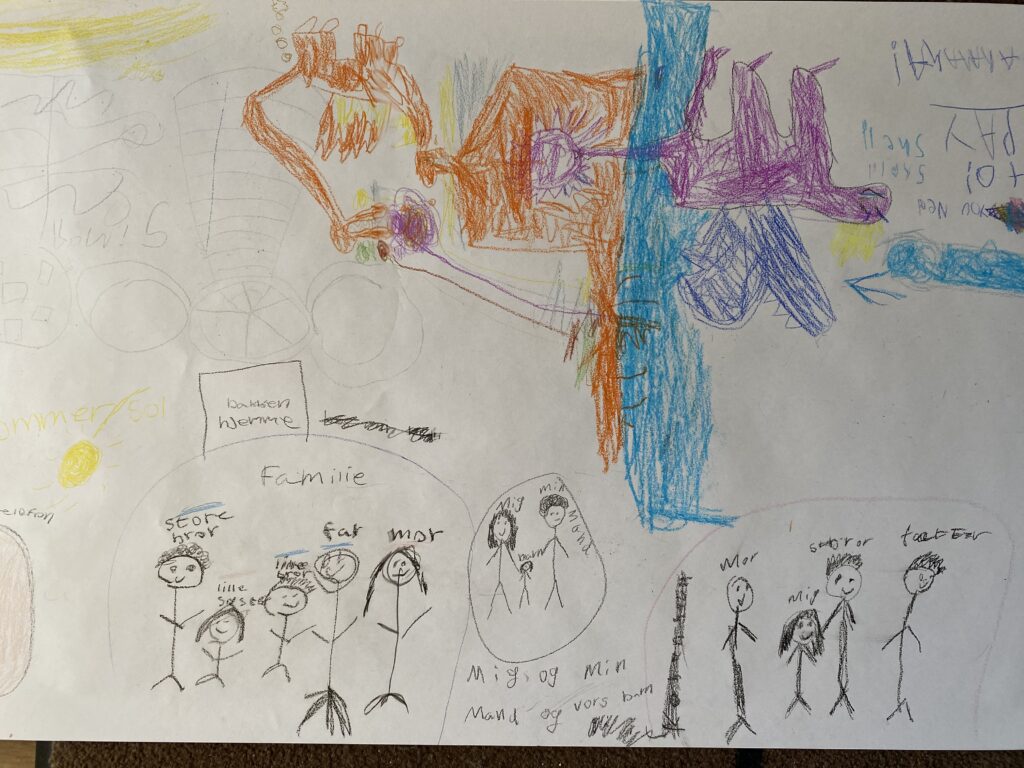
Free money and free food were themes that kept popping up. I interpret this as a need to have enough and for money not to limit what they can do. It might also be influenced by the current inflation, which kids probably sense is a worry for many families.
After the drawing brainstorm, we had musical statues, and then they got snacks and drinks. That was a big hit! The competitive spirit and their physical energy came into play, and their taste buds and little hunger pangs were satisfied.
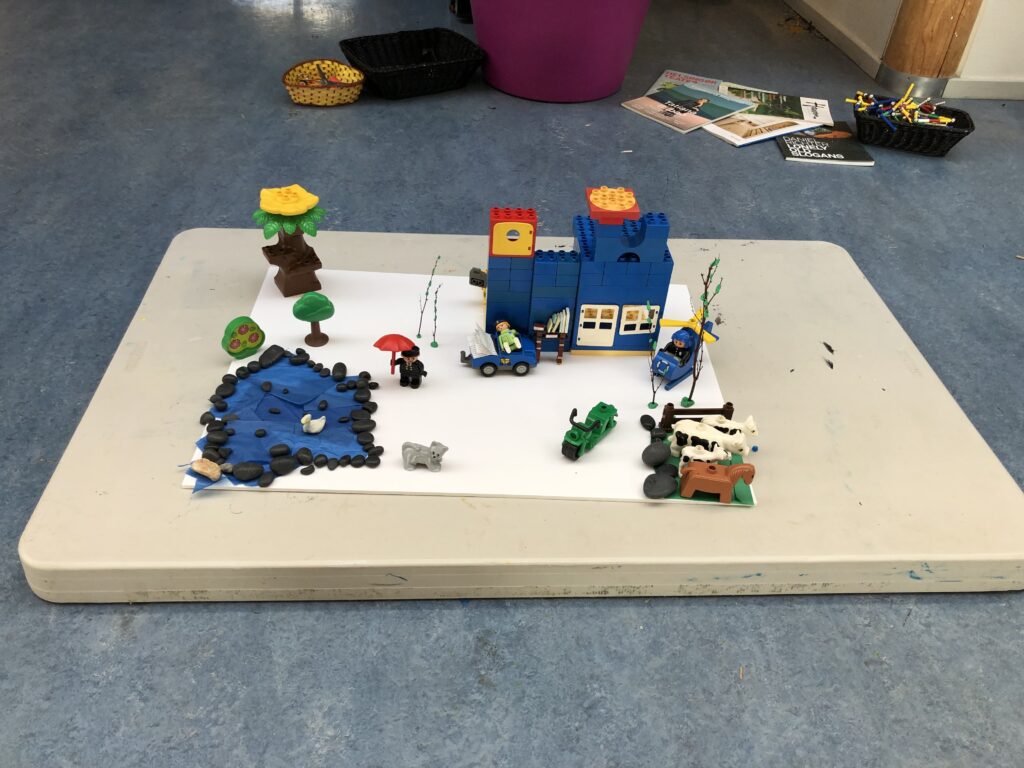
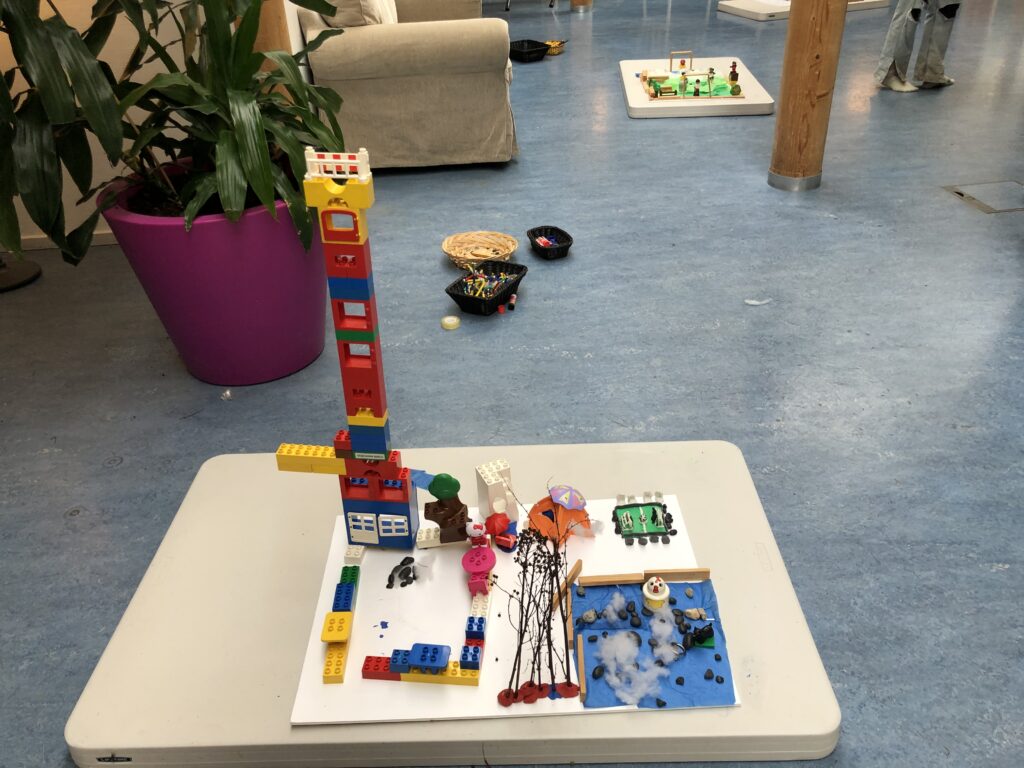
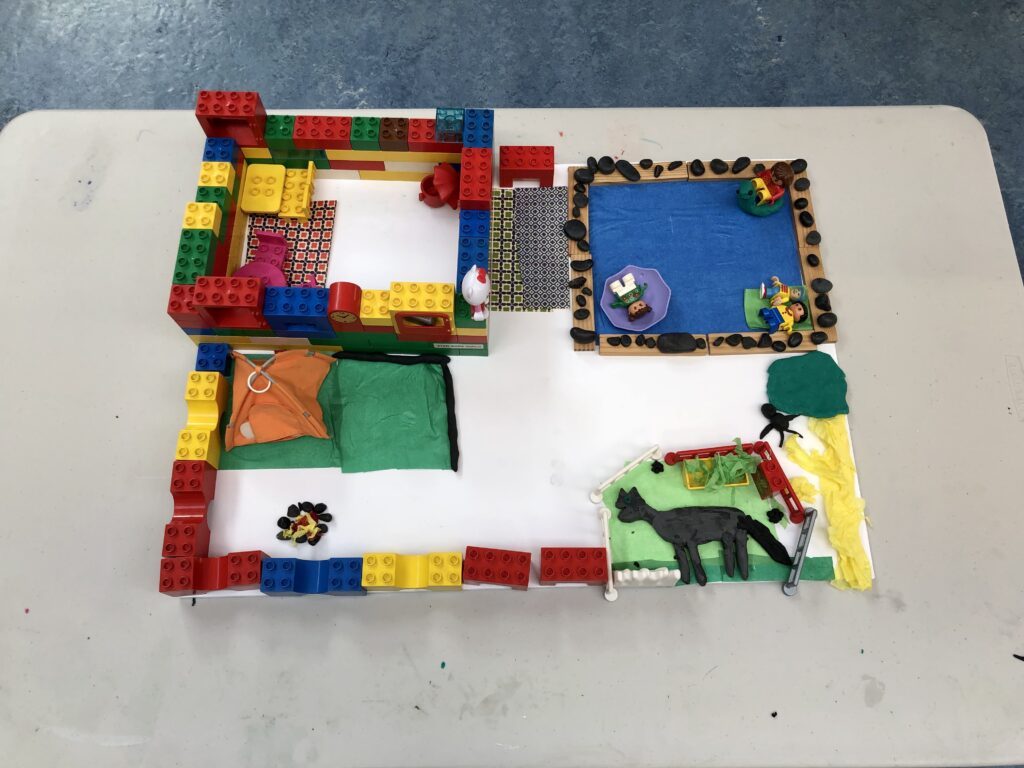
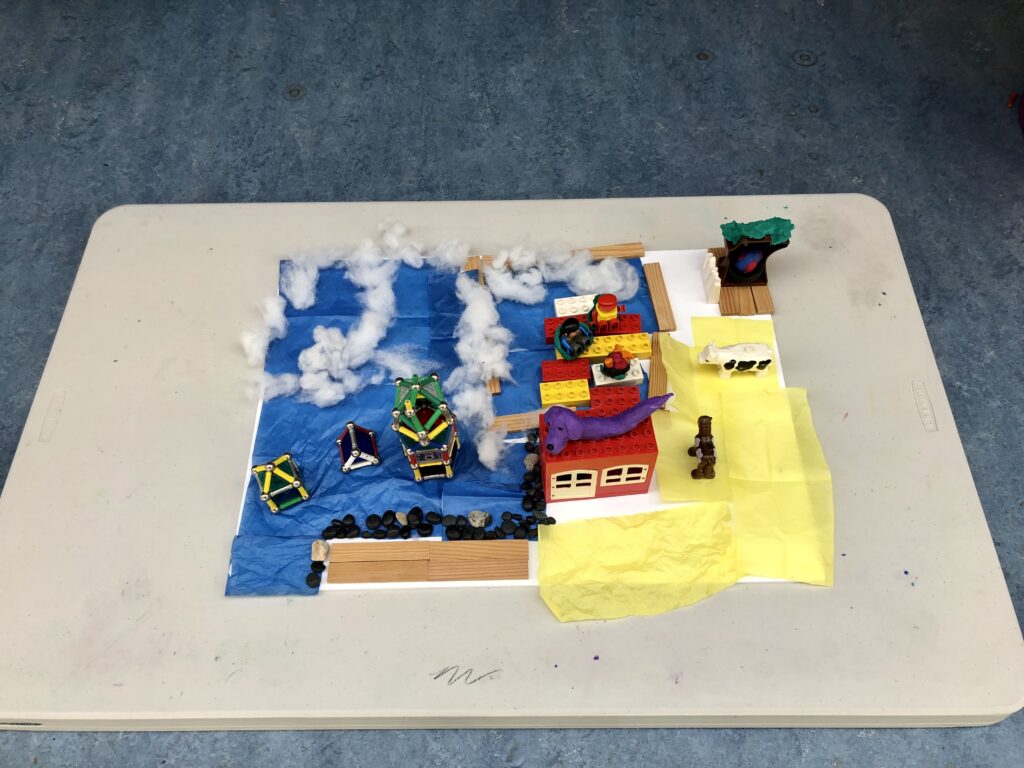
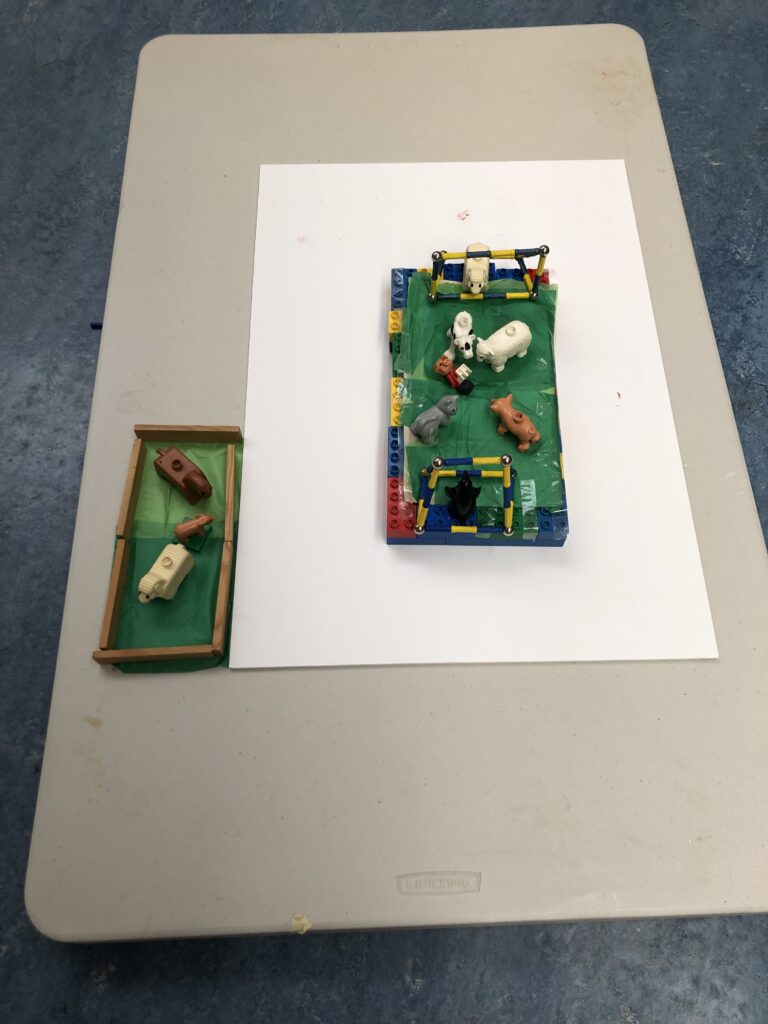
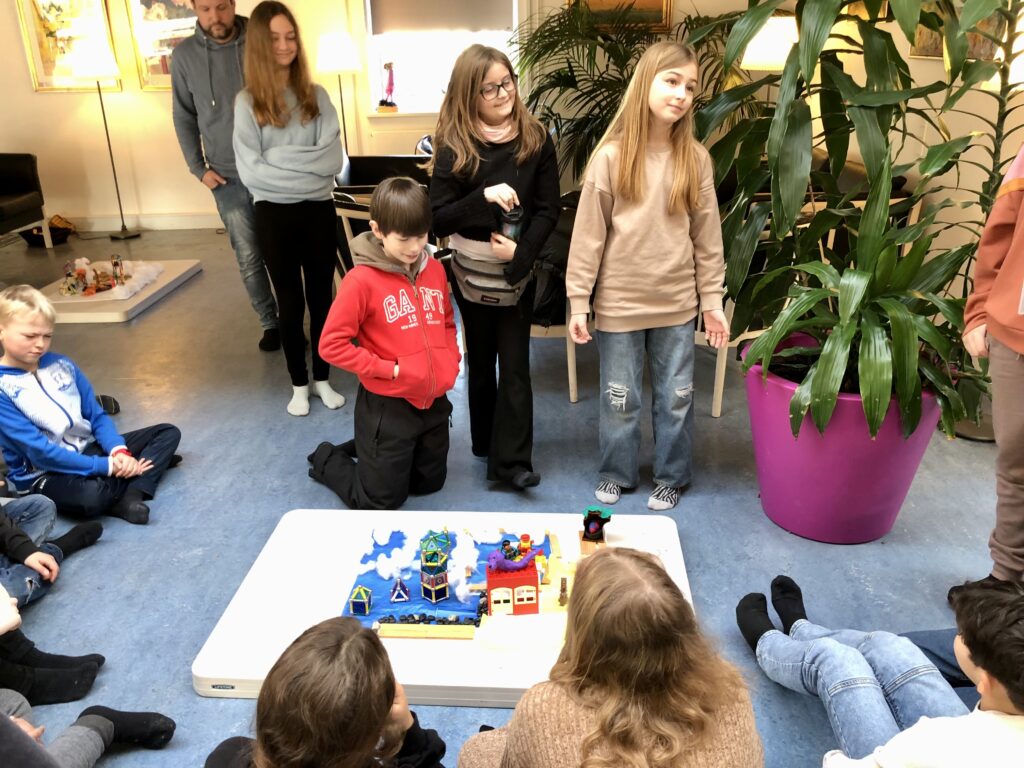
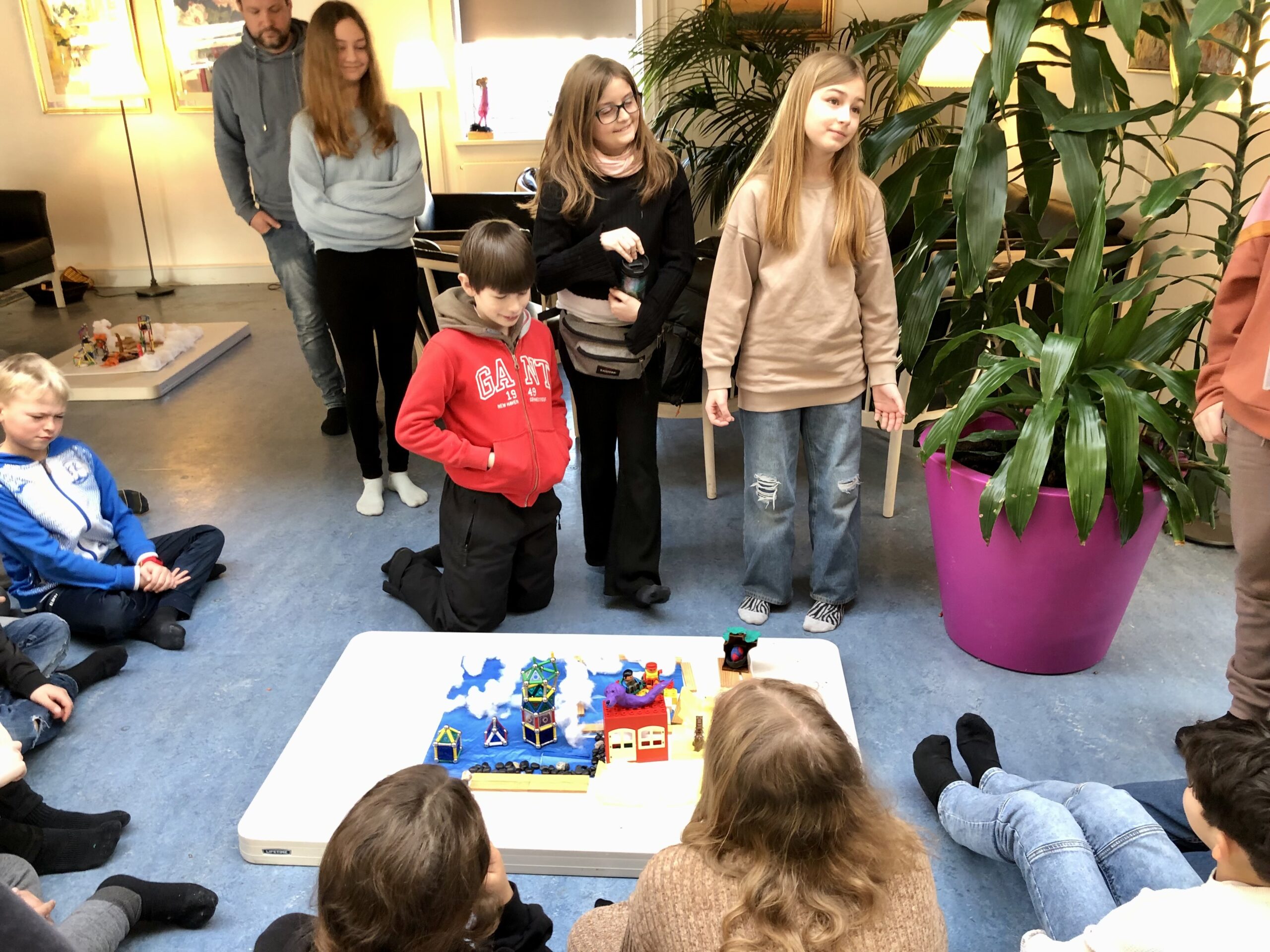
Next, the kids were split into groups of 3 to 5 people. Their task was to agree on three ideas from the idea bank and start creating their cities. They had the following materials available: clay, magnetic building sets, Kapla blocks, stones, tissue paper, LEGO, branches, and architecture and garden magazines for clippings, etc.
The Cities
The cities were all super different, but they also had some things in common because they used the same materials and shared the same idea bank.
Football fields popped up in countless combinations. Animals were also really well represented, as was water in all forms: lakes, the sea, beaches, swimming pools, and clouds. Lots of them had activities on the water and houses right by or even on the water. There were dream clouds, transport clouds, and magnetic clouds. Magical trees that brought energy and life to the cities. When we asked about the trees' magic, the kids said the idea came from the Avatar movies, where nature's well-being is closely linked to the lives of humans and animals. There were camping spots and bonfires. There were lots of sports activities, but also chill-out spots and cozy little cafes. One school was designed like a recreation center packed with activities, but it also had a 'dream corner'.
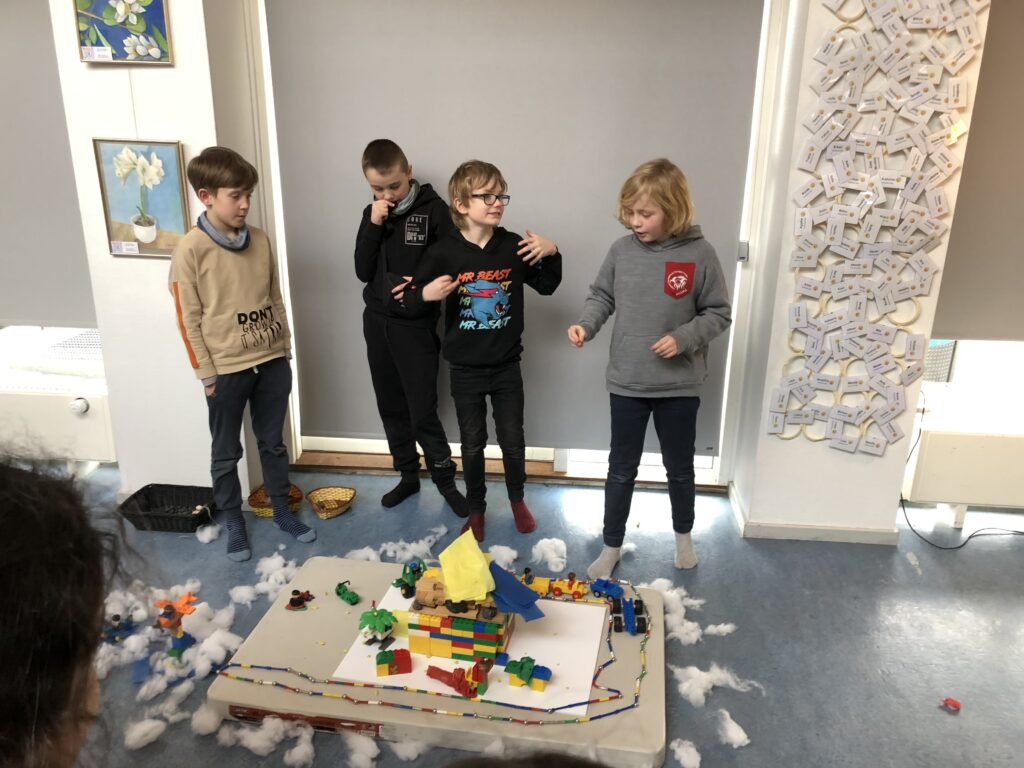
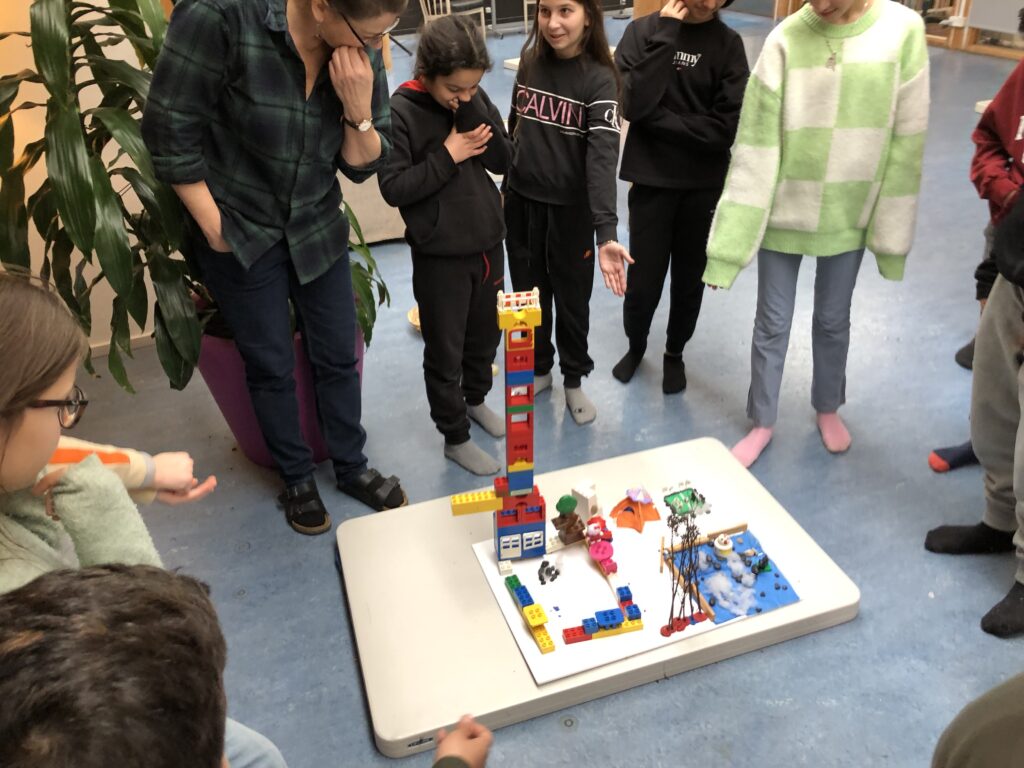
I think as adults, we should really dig into what makes football fields so special and if we can get inspired by football in our urban environments and designs. What good vibes do those colorful, multi-story houses give off? Why are animals so widely represented? What does being close to animals bring? How can we get inspired by the kids' houses and activities on the water? What does spending time with family and friends mean, and how can we design a city that's all about community?
Each group had to name their city or place and present it to the others, so both kids and adults could ask follow-up questions.
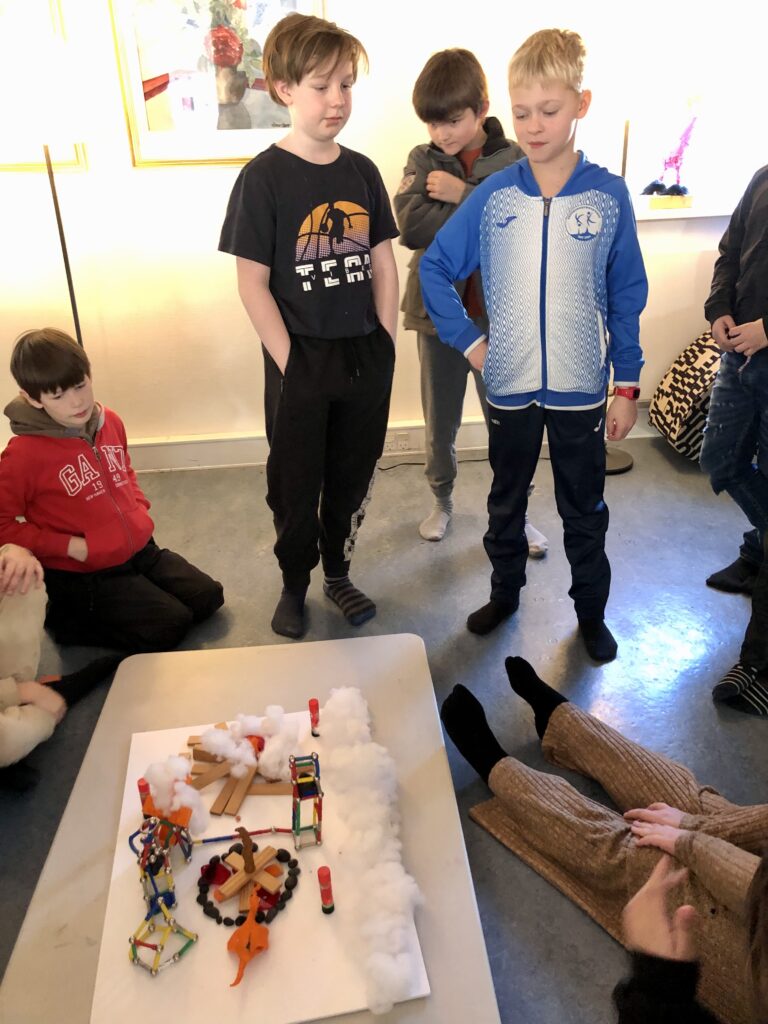
Finally, everyone gathered in a circle, and the kids were asked to say one word about what they found most exciting or fun about the whole process. Most replied that it was fun to create and build their dream city. And surprisingly, many found the fantasy journey, which some called meditation, really exciting. Musical statues were mentioned several times – and the free snacks, of course! Some mentioned the sense of community, and one person commented that it was a great experience to be able to think about what you're doing before you do it (meaning, time for reflection).
And then there was the child who said: “It's nice to know that kids have rights too. That you can decide what your world should be like and you can add colors. That it's not all square and boring.”
Teachers' Reflections
- Some groups are super creative and think UTOPIAN. Others just build something that already exists. It depends on whether they're good at thinking 'outside the box'.
- This community is characterized by the kids being happy to work together.
- They're having a good time while they work.
- They chat and work together.
- They're doing great.
- There's a big difference between the groups; the ones that do well communicate well.
- I was surprised that the boys and girls could work together.
- It was fun to see them in a different environment.
- The kids are really into the task.
- The kids care about each other.
- The atmosphere is great.
- Everyone's involved.
- Everyone's drawing – talking together – there's focus.
- The kids are happy and doing well – a bit shy too, so they're goofing around.
- Collaboration, creativity, and innovation.
- They learn to put their ideas into words and develop them.
- Choosing what to keep and what to discard.
- Prioritizing time and finishing projects.
- Learning to embrace others and their ideas.