
Approved at the general meeting at a-round on September 24, 2025. Download the minutes as a PDF here...
Introduction and Board Reshuffle
Since our last regular general meeting in September 2024, the association has seen some big changes. At an extraordinary general meeting in January 2025, the previous board stepped down as part of a planned process. The idea was to make space for the municipality's larger cultural stakeholders.
The new board now includes representatives from Helsingør Municipality, Kronborg, M/S Maritime Museum of Denmark, Boliggården, Helsingør Teater, FC Helsingør, The International Folk High School, and HamletScenen as an alternate. Citizens are also represented, for instance by Luna Voss. Henrik Irgens, a musician, and Aslak Gottlieb, who also acts as the board's secretary, serve as alternates.
This new lineup gives us a really broad base, covering cultural institutions, businesses, the municipality, and citizens. It's the perfect starting point for our work this year.
How the Association Works
Our association continues to operate on two main fronts. One is activity-based, where we use our members and network to initiate and support cultural events. The other is strategic and political work, focused on laying the groundwork for a future application to become a European Capital of Culture.
These two approaches are closely linked. The activities we organize aren't separate from the Capital of Culture project; instead, they're concrete examples of the capacity and network that our application will be built upon.
Helen Russell's Talk
For example, in April, we hosted an event with British author and journalist Helen Russell, in collaboration with The International Folk High School and Magnae Vitae in Lincolnshire. The talk took place on Montebello Allé, followed by coffee and cake. It was also livestreamed to an audience in Lincolnshire.
This really shows how we can link local activities with a European perspective. We get to offer an entertaining folk high school event for the people of Helsingør, while also fostering international collaboration and visibility.
Art Rock and the 600-Year Anniversary Sculpture
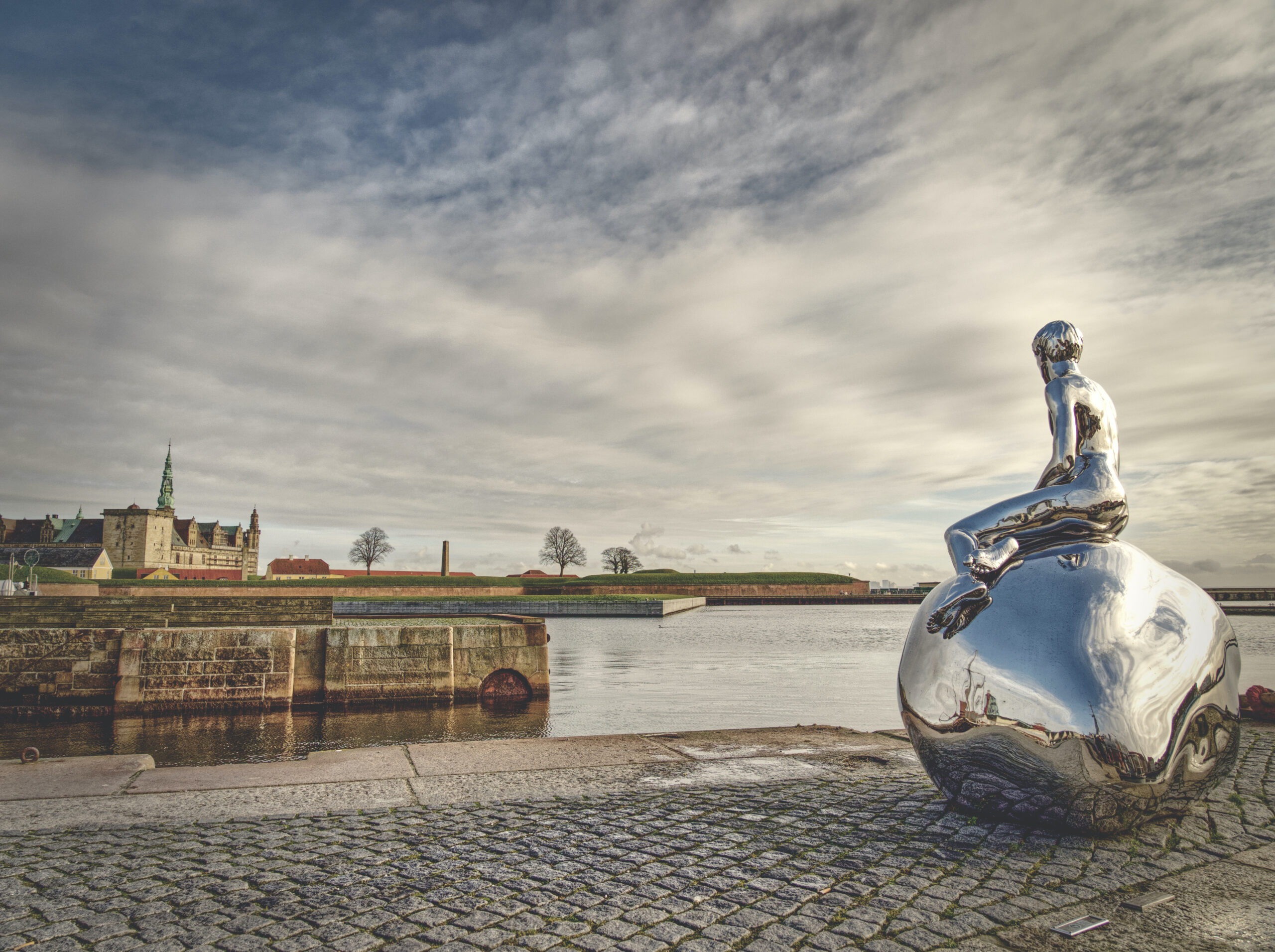
This year, we've had a special collaboration with Anonymous Artist on the project Centuriae Elsinorae. This citizen-curated artwork will be Helsingør's public gift to celebrate the city's 600th anniversary as a market town in 2026. The sculpture is being created through a collaborative process with contributions from citizens, schoolchildren, associations, and businesses, and is partly funded by crowdfunding and local collections.
Our association has championed this project and supported its development, for example, through the Kunstrock (Art Rock) event at Elværket in May, which was a festival combining music, art, and fundraising. This collaboration highlights how citizen involvement and artistic initiative perfectly align with the Capital of Culture project's core idea: that major cultural endeavors need broad public support and strong local roots.
The fundraising is nearing a quarter of a million, and the next step is to submit an application to the Danish Arts Foundation, which we're writing in collaboration with Helsingør Municipality.
VIP Event at PASSAGE Festival
During this year's PASSAGE Festival, we invited our members and partners to a VIP event. This included a sneak preview of Architects of Air and a special tour at the M/S Maritime Museum of Denmark, led by the museum director.
The PASSAGE Festival is a great example of Helsingør's vibrant international cultural scene. Our VIP event helped us connect the festival experience with our association's network and the Capital of Culture project.
Culture Night
Our association's biggest recurring task is running the secretariat for Culture Night in Tikøb, Espergærde, Hornbæk, and Helsingør. We took over this role from Helsingør Teater, and 2025 was our third year in charge.
Culture Night is a really special tradition. The program isn't curated centrally very much at all; instead, it's created through networks and collaborations involving associations, institutions, volunteers, and businesses. This means our association can't take all the credit for the content. Our role is simply to set the stage, bring everything together, and support the collaboration.
From a Capital of Culture perspective, this format is incredibly strong. Culture Night is a perfect example of how capacity and networks can be built across different sectors and players. It's the same idea that a European Capital of Culture is built on: the municipality, cultural scene, citizens, and businesses all creating something together that none of them could achieve on their own.
This year's Culture Night was a record-breaker! As of now, we've counted around 150 events, partly because Espergærde decided to stretch the concept over an entire week. A new feature is that the finale in Espergærde will be moved earlier in the evening, so everyone can join the joint closing ceremony in Helsingør. Here, the Culture Night flame will be carried in a torch relay along Strandvejen to Axeltorv, where the audience will then follow the Helsingør Girls' Guard in a procession to Kulturværftet. On the quay, there will be communal singing of a newly written Helsingør ode around a bonfire, complete with a choir and musicians.
You can see the support for this format just by looking at the list of contributors for the closing event alone: Espergærde Centret, Puls 3060, Helsingør Handel, Kulturværftet, Kronborg EL, Forsyning Helsingør, Helsingør Havne, HAL 16, Helsingør Dagblad, Værftets Madmarked, Helsingør Pigegarde, six local choirs, composer Peter Spies, pianist Thomas Jaque, and singer Søren Launbjerg. Plus, there were many participants in Tikøb and Hornbæk who organized local closing events.
Culture Night also received financial support. This year's sponsors included Kronborg EL, Sydkystens EL, Brammers Menuer, STARK, SJF Bank, Bakke & Ko, and Helsingør Municipality.
International Collaborations
Throughout the year, we've been working to strengthen our international connections.
– In England, through our collaboration with Magnae Vitae in Lincolnshire.
– In the Nordics, by planning a symposium in partnership with Kulturværftet and talking with Foreningen Norden, plus connecting with Helsingborg and other sister cities.
– In Italy, by chatting with Brindisi, who will send a delegation to Helsingør this autumn to focus on harbor transformation.
– In Belgium, through our partnership with Molenbeek, who are finalists with their European Capital of Culture application, where we're involved in a project combining football and art.
These partnerships are still in their early stages, but they show how we can connect Helsingør to European networks.
Strategic and Political Work
On the political side, we've been talking regularly with local politicians and the administration. This led to us inviting the Culture Committee in August to collaborate on a plan for how an application can be developed together by all the different parties. The Culture Committee will look at the matter after the municipal election, and the civil servants are busy preparing the groundwork.
At the same time, the board is working on a strategy for the project. Wonderful Copenhagen is part of this process, and Claus Bindslev from Nextstep is helping out with consulting support. We expect the strategy to be finished by the end of the year.
We've also contributed to public discussions by publishing articles in the local press. Our chairman wrote about the perspectives from the theater and cultural scene, Ole Skjellerup from Boliggården shares insights from the social housing areas' point of view, and Luna Voss published a column in Helsingør Dagblad in August, where she described the city as a body with culture as its heart.
600th Anniversary in 2026
As a nod to the capabilities we've built up, Helsingør Municipality has asked us to organize the evening event for the city's 600th anniversary in 2026. We see this as a natural continuation of our work with Culture Night. It's a task that shows we're seen as a reliable partner for bigger joint projects.
Wrap-up
The association's work over the past year really shows how these two aspects are connected. Our specific events create culture and community right here, right now. At the same time, they prove we can bring different people together – which is exactly what a European Capital of Culture application needs.
Our strategic work continues to focus on building political support and clear guidelines. Our task for the coming year is to take everything we've learned and turn it into a plan that can guide a political decision once the competition for the title is announced.
One key focus is the role of culture in residential areas. Culture isn't just made on big stages; it also happens in courtyards, community dinners, street theater, and local festivals. Participation is often free or low-cost, and residents become co-creators, not just audience members. This boosts both well-being and a sense of ownership, and it helps bridge the gap to established institutions.
Helsingør's strength comes from its unique blend: world-class experiences at Kronborg and Kulturværftet, right alongside vibrant communities in our residential areas. For the European Capital of Culture project, it's really important that these two paths develop hand-in-hand. This balance between the grand and the local can make Helsingør a shining example of how culture brings people together across different communities.
But when we, as an association, work towards Helsingør becoming the European Capital of Culture in 2032, it's not just about our own municipality, city, and urban communities. It's also about how all of Zealand, in a strategic partnership with Skåne, can grow through culture and collaboration.
Today, municipalities in Zealand often compete more than they collaborate. However, with the upcoming fixed link to Germany, all of Eastern Denmark is facing a new reality. If we want to make the most of the opportunities that come with it, we need to think about connections rather than fragments.
A European Capital of Culture application can be just the tool for that. It's all about co-creation and partnerships, bringing together citizens, businesses, municipalities, and cultural institutions. And even if Helsingør isn't chosen, we should hope that the 2032 title goes to another city in Zealand. Because that would strengthen the entire region – as a tourist destination, a great place to live, and a bridge to Europe.
That's how we should understand our work. The local and tangible aspects are necessary and valuable on their own. But at the same time, it points towards a bigger picture: a Zealand that collaborates across the board and becomes a clear part of Europe.
