
SATURDAY, JUNE 24, 2023, 1 PM - 2 PM AT KULTURHUS SYD, HOVMARKEN 7, HELSINGØR
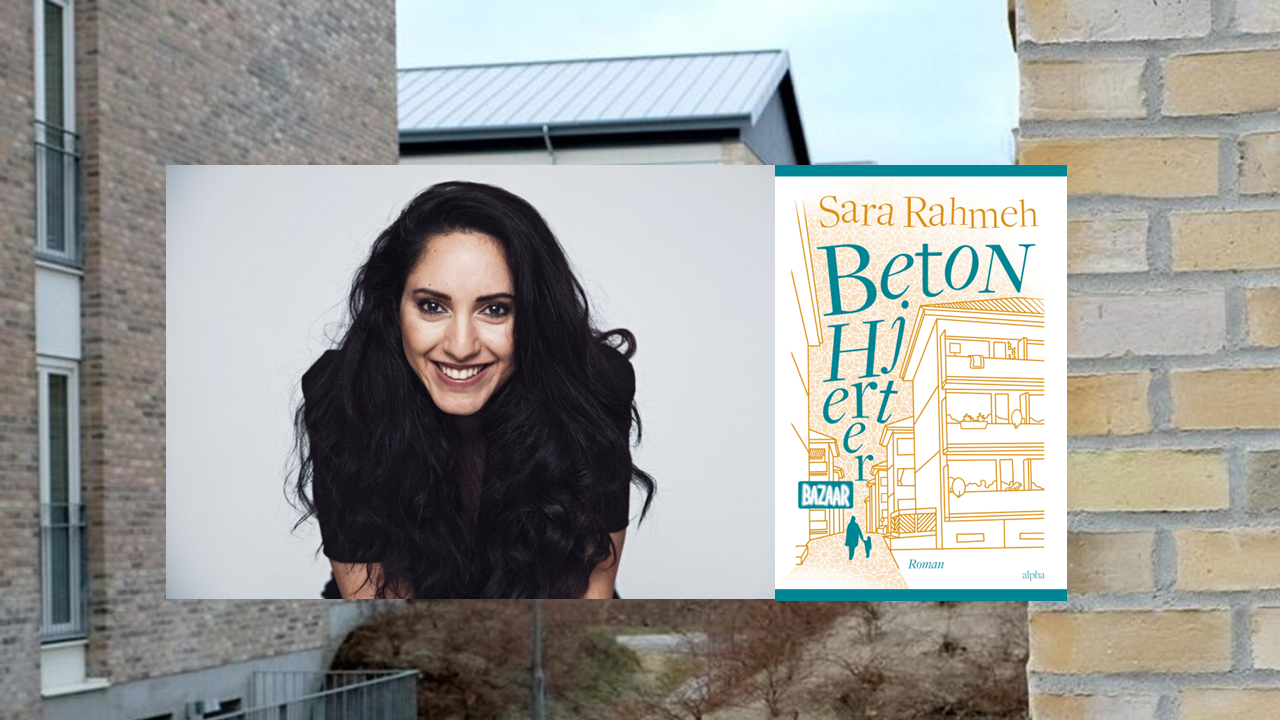
Being a European Capital of Culture is also about developing residential areas through cultural activities. That's why we're thrilled to collaborate with Boliggaarden and contribute to the opening of the Neighborhood Festival in Vapnagaard with a literary visit from Sara Rahmeh.
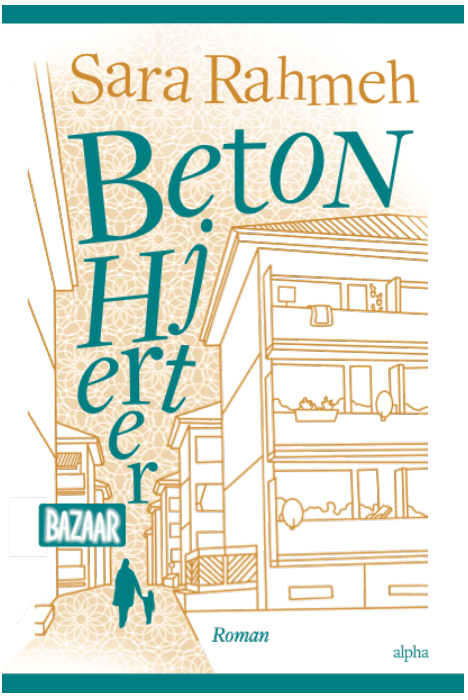
In May, Sara debuted as a novelist with the book Concrete Hearts. She'll read from it, but we'll also get to hear her perform poetry from the collection 'Far Away and Just Around the Corner'.
Aslak Gottlieb will interview her about the inspiration she gained as a writer from growing up among the housing blocks in Taastrupgaard.
After the talk, Sara will sign books and chat with anyone who'd like to. Admission is free – everyone's welcome! Also, feel free to join the neighborhood festival, which starts right after the talk at 2 PM.
Sara Rameh is a Danish author, poet, improv actress, and playwright. She's known for her powerful presence as a slam poet and now also as a novelist with Alpha publishing house, where her poems have also been previously published.
PRESS RELEASE FROM ALPHA PUBLISHING HOUSE, MAY 2023
Concrete Hearts
Concrete Hearts, human destinies, spices, and stories …
Author, poet, improv actress, and playwright Sara Rahmeh gives us a unique insight into
what it's like to grow up in the block in her debut novel, Concrete Hearts.
I know what people say about my home. It should be torn down and replaced with
senior housing and outdoor fitness facilities for new moms with strollers. A
Starbucks would also look nice. And more colors. Anything but gray. They see the satellite dishes
on the balconies as satellite receivers with a direct connection to ISIS.Yeah, hello ISIS, it's me again.
From the book Concrete Hearts
When are we overthrowing Danish democracy?
That'll teach those infidels!
Yasmin lives in The Block. Between the Bazaar, the playground, the shisha cafe, and concrete walls. The Block is full of human destinies, poetry, and stories waiting to be told. If you ask Yasmin, she'll tell you the truth about the place she grew up. About Abdulrahman, who used to be called Rasmus, Namaste Niels, and Tania with an 'i'. About Malik with the brown eyes, the halal aunties, and maybe the story of her mama.
Sara Rahmeh has been writing diaries since she was 9 years old. A couple of years ago, she dug them out and started rereading them, and she ended up crying and laughing over episodes from Taastrupgaard, where she grew up:
”It made me want to write a novel about my first home, because we rarely read about those kinds of homes in Denmark, unless they're on the front page of the newspaper with a sensational, divisive headline. Concrete Hearts is my ode to the western suburbs, a kind of 'Vangede pictures' with extra chili. A novel about growing up, for better or worse. A gallery of human stories that I believe deserve their place in Danish literature,” Sara Rahmeh explains and continues:
"The block in the book is a fictional place, but the stories about the solidarity between neighbors, the gossipy aunts who scan you from head to toe, and the merging of cultures come from my memories and diaries. I wrote 'Concrete Hearts' for those who've never felt seen in a Danish novel. I hope they can see a bit of themselves in my story. I wrote 'Concrete Hearts' because I'm proud of how I grew up, even though the world has thrown prejudices my way throughout my life. I let go of those while writing the book. I'm proud of my upbringing and my home, and the people I've met along the way have made such a big impression on me that it resulted in a book."
Growing up with and in two cultures has really shaped Sara Rahmeh:
"Two cultures are better than one. I'm proud of both, I can poke fun at both, and both have disappointed me and made me happy. The best thing I know from Arab culture is the strong sense of community and how much family is valued. What I love about Danish culture is that people talk about things, even the painful stuff. And of course, gravy… lots of gravy. On everything."